Slow-release Fertilizers and Soil Improvement
Natural zeolites, as controlled-release fertilizer carriers, enable the regulated release of major nutrients such as nitrogen, phosphorus, and potassium through cation exchange and pore adsorption mechanisms. In soil, zeolites adsorb excess nutrients and release them when plant uptake is insufficient, reducing nutrient leaching and volatilization losses while maintaining soil fertility and moisture content. Studies have shown that combining zeolites with urea or compound fertilizers enhances growth rates, yields, and biomass of crops including corn, soybeans, rice, and sunflowers.
The soil-improving effects of zeolites are further demonstrated by enhancing cation exchange capacity, improving permeability and aeration, increasing soil water retention and nitrogen fixation capacity, thereby promoting microbial activity and nutrient utilization efficiency.
Agricultural Applications of Industrial Waste-Synthesized Zeolites
The synthesis of zeolites from agricultural or industrial waste such as coal ash, rice husk ash, and sugarcane ash not only reduces production costs but also offers environmental benefits. Using alkaline hydrothermal or melt-hydrothermal methods, zeolites including Merlinoite, X-type zeolite, and A-type zeolite can be prepared, which are loaded with essential nutrients such as potassium, phosphorus, and nitrogen, and serve as controlled-release fertilizers that significantly enhance crop absorption efficiency and yield.
In experiments, melino zeolite synthesized from fly ash demonstrated sustained-release efficacy comparable to commercial potassium chloride fertilizers in wheat and corn cultivation, while rhodochrosite-K derived from rice husk ash served as a microbial carrier to enhance the activity of nitrogen-fixing and phosphorus-solubilizing microorganisms. Nanoscale zeolites (SNZ and SMSNZ) obtained from sugarcane ash improved plant nutrient uptake and significantly enhanced soil water retention capacity after loading nitrogen, phosphorus, and potassium.
Applications of Natural Zeolites in Animal Nutrition
1. Mechanism of Action of Feed Additives
Zeolites serve as natural additives in animal feed, capable of adsorbing ammonium ions, mycotoxins, and other harmful substances in the digestive tract, gradually releasing nutrients, regulating intestinal pH levels and microbial balance, thereby enhancing feed conversion efficiency, nutrient absorption rates, and growth performance.
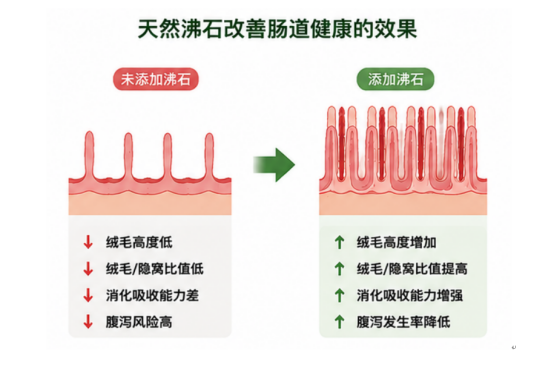
In ruminants, zeolites can stabilize rumen pH levels and mitigate the toxic risks associated with high-urea diets by adsorbing ammonia nitrogen (NH3-N), while promoting microbial protein synthesis, increasing total blood protein levels, and reducing blood urea concentration. Studies in poultry and pigs have demonstrated that zeolite supplementation enhances small intestinal villus height and villus/ crypt ratio, reduces diarrhea incidence, improves bone strength, and enhances meat quality characteristics.

2. Improvement of饲养 Environment and Health Conditions
Zeolite additives can adsorb ammonia and odors in feed and bedding materials, effectively improving the living environment for confined animals, reducing ammonia emissions, and enhancing animal welfare as well as environmental sustainability. Additionally, zeolite can be utilized for preventing clumping, regulating flow, optimizing non-protein nitrogen utilization, and supporting bone tissue growth, thereby increasing the production value of dairy products, eggs, and meat.
3. Safety of Hematological Physiological Parameters
Multiple studies have demonstrated that the addition of zeolite to animal diets does not adversely affect blood levels of glucose, triglycerides, cholesterol, or albumin, while significantly increasing total protein content and reducing urea levels, thereby maintaining hepatic and renal function as well as overall animal health.
Natural zeolites demonstrate extensive application potential in agriculture and animal nutrition due to their unique microporous structure, high cation exchange capacity, and superior adsorption and controlled-release properties. They not only enhance crop yields and improve soil physicochemical characteristics but also boost feed utilization efficiency, production performance, and animal health. Zeolites synthesized from industrial or agricultural waste further reduce production costs and enhance sustainability, contributing to the development of a circular economy. In the future, the technological applications of natural zeolites in efficient agriculture and sustainable livestock farming remain highly promising.