With the rapid development of industries such as textiles, dyeing and printing, and chemicals, dye wastewater has become a significant challenge in global water environment management. Among these, methylene blue (MB) is widely studied as a typical organic dye pollutant due to its stable chemical structure, resistance to degradation, and tendency to persist long-term in water bodies. A recent study published in Scientific Reports demonstrated that natural zeolites from Saudi Arabia can achieve a removal rate of up to 98.9% for methylene blue without complex chemical modification, highlighting the substantial potential of natural mineral materials in green water treatment.
This study once again demonstrates that natural zeolites are not only functional minerals in agriculture and animal husbandry, but also high-performance adsorption materials with significant environmental remediation value. Their unique microstructure enables them to efficiently capture and immobilize harmful substances in water akin to a "molecular-level filter."
Natural zeolites are hydrated aluminosilicate minerals characterized by a regularly arranged three-dimensional pore structure and numerous nanoscale cavities, earning them the designation of natural "molecular sieves." Scanning electron microscopy (SEM) observations reveal that natural zeolites exhibit a rough surface covered with micropores and mesopores, which collectively form an extensive specific surface area providing abundant active sites for pollutant adsorption. Fourier transform infrared spectroscopy (FTIR) and X-ray diffraction (XRD) analyses further confirm the presence of numerous Si–O–Si and Si–O–Al bonds as well as surface hydroxyl groups within the zeolite framework, endowing them with exceptional ion exchange capacity and surface reactivity.
From a mechanistic perspective, the removal of dye molecules by natural zeolites involves more than simple filtration; it results from the synergistic action of multiple mechanisms. On one hand, the zeolite framework carries a stable negative charge that enables electrostatic attraction of positively charged methylene blue molecules. On the other hand, its high cation exchange capacity (CEC) allows dye cations to undergo displacement reactions with exchangeable cations within the pores, achieving robust adsorption. Furthermore, the hydroxyl functional groups on the zeolite surface enhance binding affinity through hydrogen bonding and π-π interactions, thereby forming a stable adsorption system.
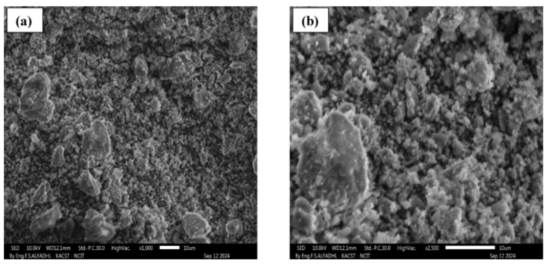
The results demonstrate that under conditions of pH 7, adsorbent dosage of 0.01 g, contact time of 60 minutes, and temperature of 25°C, natural zeolite achieves a removal rate of 98.9% for methylene blue. The adsorption behavior conforms to both the Langmuir single-layer adsorption model and the quasi-second-order kinetic model, indicating that dye molecules primarily coat the zeolite surface as a monolayer with chemical adsorption serving as the dominant mechanism. The maximum theoretical adsorption capacity reaches 116.34 mg/g, representing a high performance among natural mineral adsorbents.
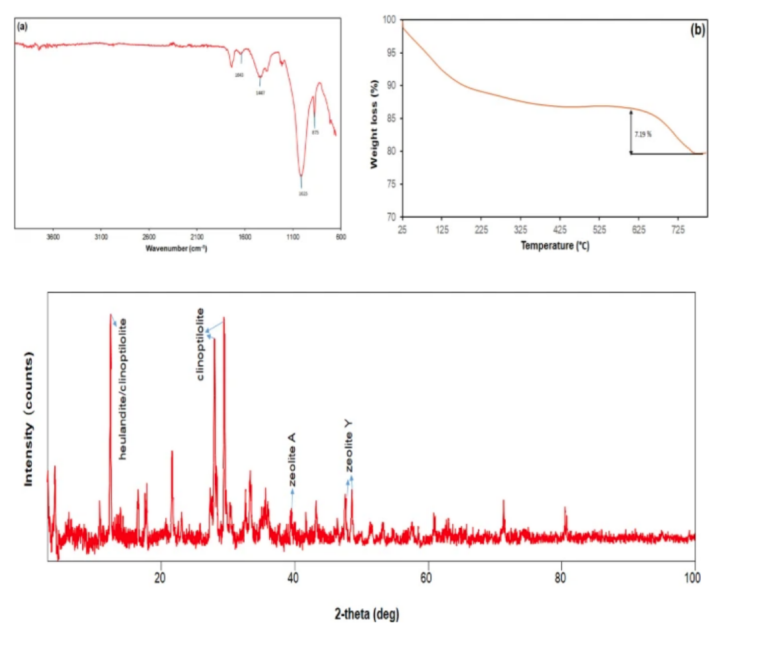
Notably, natural zeolites exhibit not only high adsorption efficiency but also excellent cyclic regeneration capability. Desorption experiments using three regenerants—NaOH, HCl, and acetone—showed that NaOH demonstrated the best regeneration performance with a desorption rate of 93.63%. After four adsorption-regeneration cycles, the zeolite maintained over 86% pollutant removal efficiency, indicating that the same material can be reused repeatedly over time, significantly reducing operational costs and solid waste generation.
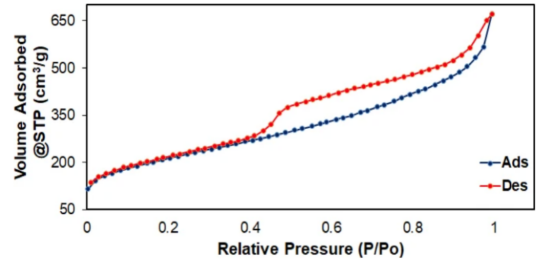
From an engineering application perspective, the greatest advantage of natural zeolites lies not merely in their adsorption capacity but in their overall cost-effectiveness. Compared to activated carbon, natural zeolites offer abundant reserves, low extraction costs, no requirement for high-temperature activation, and excellent thermal stability along with mechanical strength. When treating dye wastewater, they can also remove ammonia nitrogen, heavy metal ions, and certain organic pollutants through ion exchange, achieving the effect of "one material, multiple purification functions." Consequently, they have broad applications in industrial wastewater treatment, aquaculture wastewater management, municipal sewage treatment, and mine remediation.