In recent years, a novel perinatal nutrition strategy rapidly adopted across U.S. dairy farms has garnered significant industry attention. Centered on natural zeolites, this approach addresses the risk of postpartum hypocalcemia in cows by modulating phosphorus metabolism rather than relying on conventional acidification methods, and is regarded as redefining the principles of perinatal mineral nutrition management. Field applications have demonstrated that this strategy significantly reduces the incidence of clinical postpartum hypocalcemia and improves calcium homeostasis within 48–72 hours after delivery, highlighting its substantial practical potential and widespread applicability.
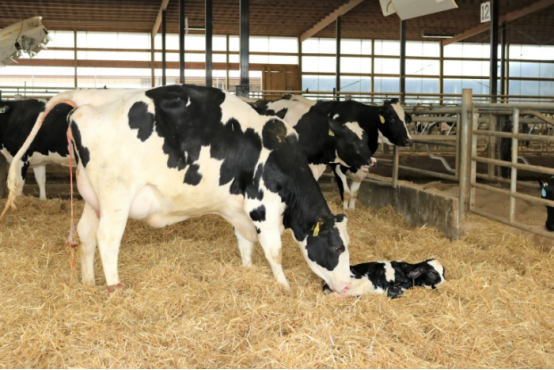
Postpartum hypocalcemia remains one of the most common metabolic disorders in dairy cattle production systems, with a subclinical prevalence rate as high as 25%–45%. Its effects are often insidious yet costly, including reduced feed intake, uterine inflammation, retained placenta, and increased incidence of mastitis. Consequently, regulation of mineral metabolism in perinatal cows continues to be a central focus of research in nutrition and veterinary science.
For a long time, the industry has primarily relied on negative DCAD (Dietary Cation-Anion Difference) diets for prevention, with its core mechanism involving enhanced parathyroid hormone (PTH) sensitivity through mild metabolic acidosis to promote bone calcium mobilization. However, this strategy is highly dependent on feed composition (particularly reliance on low-potassium forage), dry matter intake, and urinary pH monitoring, presenting certain limitations under large-scale farming and diversified feed conditions.

Against this backdrop, natural zeolites have been introduced into production practice as a novel perinatal mineral regulator. Their primary mechanism of action does not involve altering acid-base balance but rather involves selective binding of dietary phosphorus in the digestive tract, resulting in a mild decline in systemic phosphorus levels and thereby triggering compensatory mineral mobilization responses in the body. Since calcium and phosphorus coexist in bones in fixed proportions, when animals mobilize phosphorus stored in bones, calcium is simultaneously released into the bloodstream, enhancing postpartum blood calcium availability. This mechanism circumvents the traditional PTH-dependent pathway dependent on DCAD, establishing a new regulatory paradigm characterized by "phosphorus-driven bone mobilization leading to co-release of calcium."
From the perspective of endocrine regulation, this process also involves the participation of fibroblast growth factor-23 (FGF-23) and the vitamin D metabolic pathway, establishing a synergistic feedback regulation between phosphorus homeostasis and calcium homeostasis. Unlike DCAD's "acidification-initiated regulation," the zeolite strategy more closely resembles "mineral restriction-induced regulation," with a more direct mechanism of action that is independent of feed acidification intensity.
Field application data demonstrate that in pastures implementing the zeolite strategy, blood calcium stability significantly improved within 48–72 hours postpartum, with a marked reduction in clinical cases of hypocalcemia. Some reports indicate that case numbers decreased from approximately 30 per month to fewer than 5, reflecting a clear trend toward improved herd health. Additionally, this strategy reduced reliance on postpartum calcium supplements and intravenous calcium administration, thereby lowering labor costs and the frequency of stress management interventions.
At the nutritional management level, another significant advantage of the zeolite strategy lies in enhanced formulation flexibility. By eliminating reliance on low-potassium feed systems, producers can utilize a wider range of highly palatable forages (such as rye and sorghum silage), thereby improving the efficiency of self-supplied feed utilization and reducing dependence on externally sourced feed formulations. This feature holds substantial economic benefits for large-scale farms.
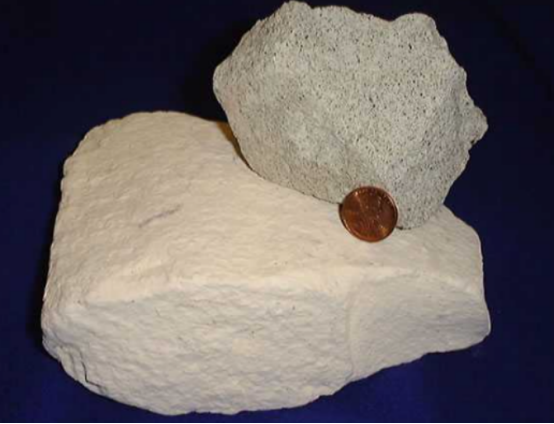
From a technical perspective, natural zeolites, as hydrated aluminosilicate minerals, possess high cation exchange capacity and a stable three-dimensional pore structure, enabling them to stably adsorb phosphate ions and related anionic components in the gastrointestinal environment while maintaining structural stability. This "selective ion capture capability" constitutes the fundamental physical basis for their role as perinatal mineral regulators.
Although this technology has demonstrated promising efficacy in practice, its application remains constrained by certain limitations. Studies indicate that in high-phosphorus diet systems (such as those based on distiller's grains or high-protein by-products), zeolites' phosphorus-binding capacity may approach saturation, thereby reducing their regulatory effectiveness. Under these conditions, conventional DCAD systems may still exhibit greater stability. Consequently, zeolites are not a viable alternative but rather serve as an essential complementary tool to DCAD systems.
Overall, natural zeolites are driving a shift in perinatal nutrition management for dairy cows from the "acid-base regulation model" to the "mineral metabolism regulation model." This transition from pH modulation to phosphorus homeostasis regulation not only expands the theoretical scope of mineral nutrition regulation but also provides more flexible and less dependent strategies for modern large-scale dairy production. With further refinement of field data and mechanistic studies, zeolites are poised to become one of the key functional mineral materials in perinatal dairy cow metabolic management systems.