I. Research Background: Natural Zeolites as the Core of Low-Carbon Cementitious Materials
In 2026, the research team from Binhai University of Science and Technology (ESPOL), in collaboration with the University of Buenos Aires, published their findings in the journal *Construction and Building Materials*, investigating a geological polymer material system based on natural zeolites as the core raw material. The study utilized natural zeolites from Ecuador's coastal region, employed an alkali-induced reaction to construct an inorganic cementitious structure, and incorporated the biopolymer chitosan for modification.
In traditional cement systems, the production of Portland cement generates substantial carbon dioxide emissions. Natural zeolites, as minerals rich in silicoaluminous frameworks, can participate in geological polymerization reactions under alkaline conditions to form stable three-dimensional network structures. This property makes them one of the key raw materials for replacing conventional cement, while maintaining excellent structural stability and material integrity.
The study constructs a geological polymer matrix with natural zeolites as the main component. By controlling the silicon-to-aluminum ratio and reaction conditions, the material's morphology and performance are optimized, providing a mineral-based foundation for low-carbon building materials.
II. Material Construction: A Geological Polymerization System Dominated by Natural Zeolites
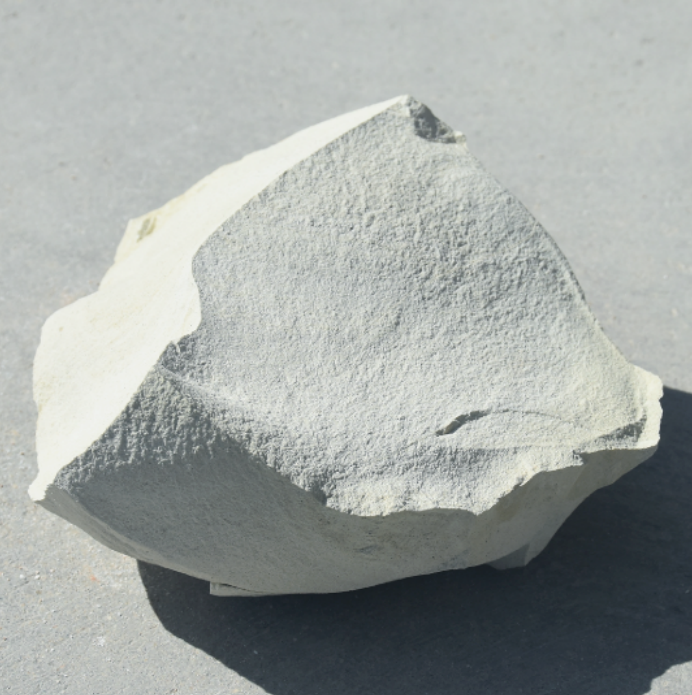
The study employs natural zeolites sourced from the coastal region of Ecuador as the primary inorganic component. Using an alkaline initiator, a dissolution-reconstruction reaction is induced to form a geopolymer network with a continuous structure. During this process, the Si–O–Al framework within the zeolites is partially dissociated and reassembled into a stable inorganic polymer structure.
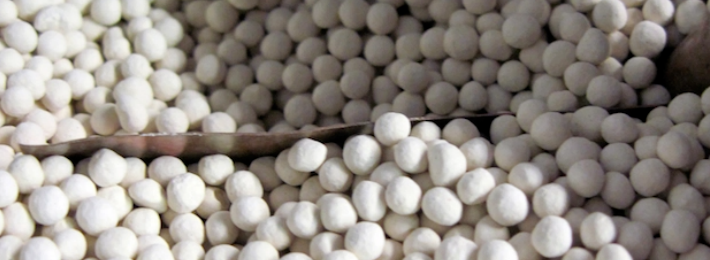
In the zeolite matrix, researchers added chitosan at varying concentrations (0.075%–0.20%) to form a composite material system. The role of chitosan in this system primarily manifests in its regulation of the microstructure, whereas the natural zeolite consistently serves as the structural framework and reactive core, determining the fundamental mechanical properties and stability of the material.
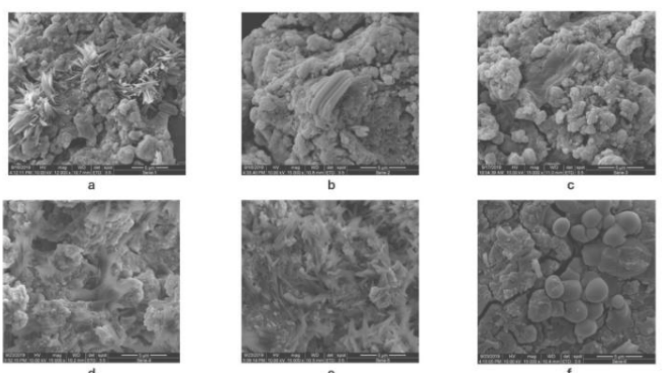
Scanning electron microscopy (SEM) analysis revealed that the zeolite geological polymer without the modifier exhibited a relatively loose structure, whereas in the presence of an appropriate amount of chitosan, tighter bonding formed between the zeolite particles and the pore structure became more uniform, indicating that the zeolite provides a stable support framework within the material.
III. Core Performance: Mechanical Support and Structural Stability of Natural Zeolites
The experimental results demonstrate that the compressive strength of geological polymer materials based on natural zeolites increased from 2.10 MPa of the original material to approximately 3.51 MPa after adding an appropriate amount of modifier, representing a 67% improvement. This change highlights the pivotal role of the zeolite framework in structural reinforcement.
Although this strength level remains lower than that of traditional structural concrete, it is sufficient to meet the performance requirements of non-load-bearing architectural components such as panels, tiles, and building cladding. The mechanical properties of the material primarily stem from the three-dimensional inorganic network structure formed by zeolites. This structure provides stable support during the reaction process, ensuring the material maintains its integrity under external forces.
Microscopic analysis further demonstrates that when the modifier concentration is excessively high, agglomeration occurs within the zeolite matrix, thereby compromising structural uniformity and reducing mechanical properties. These findings indicate that performance optimization in zeolite systems depends on the stable distribution of their internal structure rather than simply increasing the additive content.
IV. Functional Performance: The natural zeolite structure confers antibacterial properties
In addition to mechanical properties, the study also evaluated the antimicrobial performance of the material. Experimental results demonstrated that the composite material based on natural zeolite exhibited significant inhibitory effects against Klebsiella pneumoniae and Staphylococcus aureus. This antimicrobial efficacy primarily stems from the densification of the material's internal structure and alterations in its surface active sites.
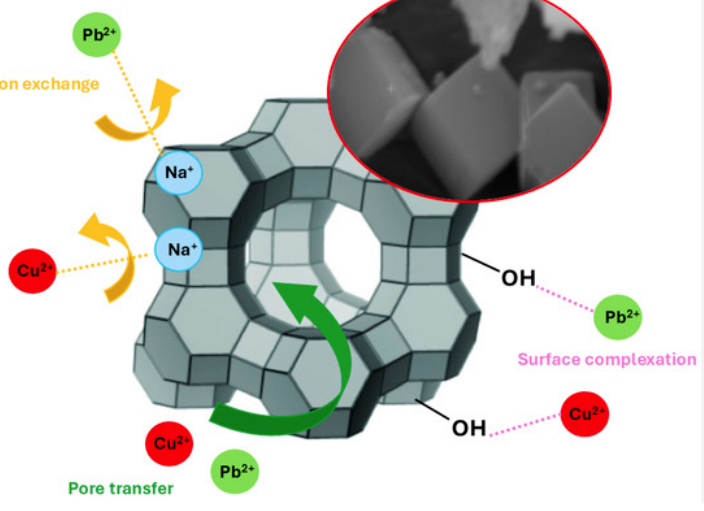
In this system, zeolites provide a porous structure and adsorption capacity that hinder microbial attachment and diffusion on the material surface, while simultaneously suppressing bacterial growth by modulating the microenvironment. Experimental results demonstrate that under optimal ratios, zeolite-based materials maintain structural stability while exhibiting surface protection properties. This capability extends the role of natural zeolites in building materials beyond structural support to include functional applications.
V. Conclusion: Natural zeolites, as core materials, exhibit unified structure and function
This study demonstrates that in geological polymer systems, natural zeolites serve not only as fundamental raw materials but also as the core structural units determining material properties. Their silico-alumina framework forms a stable network under alkaline activation conditions, directly influencing the mechanical properties, pore structure, and durability of the materials.
Through the complexation with chitosan, the zeolite structure was further optimized, enhancing the material's performance while maintaining its stability; however, the overall properties remain dominated by the zeolite framework. Experimental results demonstrate that natural zeolites are successfully transformed from mineral raw materials into functional materials within this system.
This study centers on natural zeolites to develop a geological polymer material system characterized by structural stability and certain functional properties, providing experimental evidence for its application in building materials.