I. Research Background: A Novel Approach of Natural Zeolites in Mine Wastewater Treatment
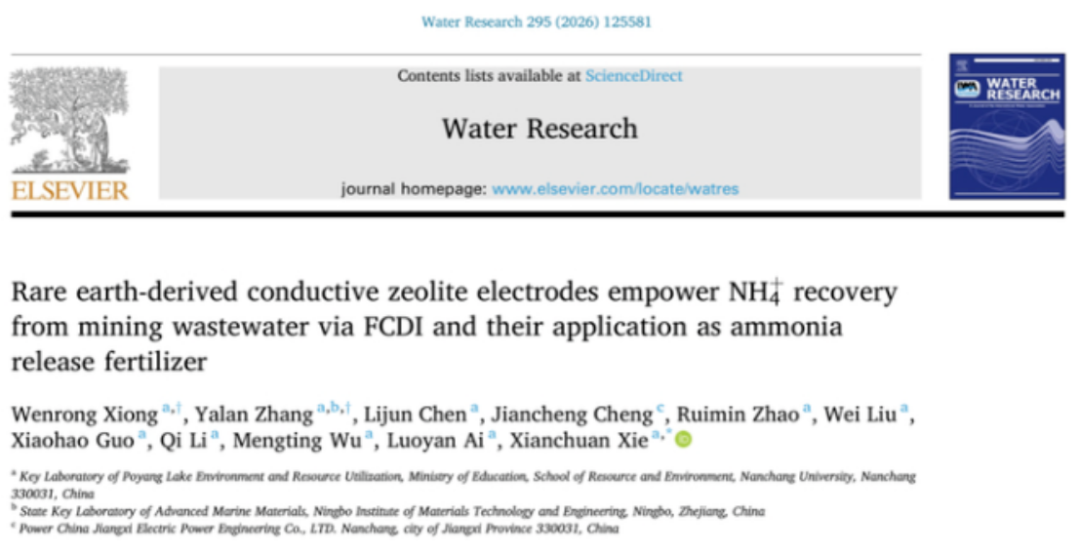
In 2026, the research team led by Xie Xianchuan at Nanchang University published a study in the journal *Water Research* (impact factor 12.4), systematically investigating the feasibility of preparing conductive zeolites from rare earth tailings as raw materials for ammonia nitrogen recovery from mining wastewater. The paper is titled:
Rare earth-derived conductive zeolite electrodes empower NH₄⁺ recovery from mining wastewater via FCDI and their application as ammonia release fertilizer(DOI: 10.1016/j.watres.2026.125581)。
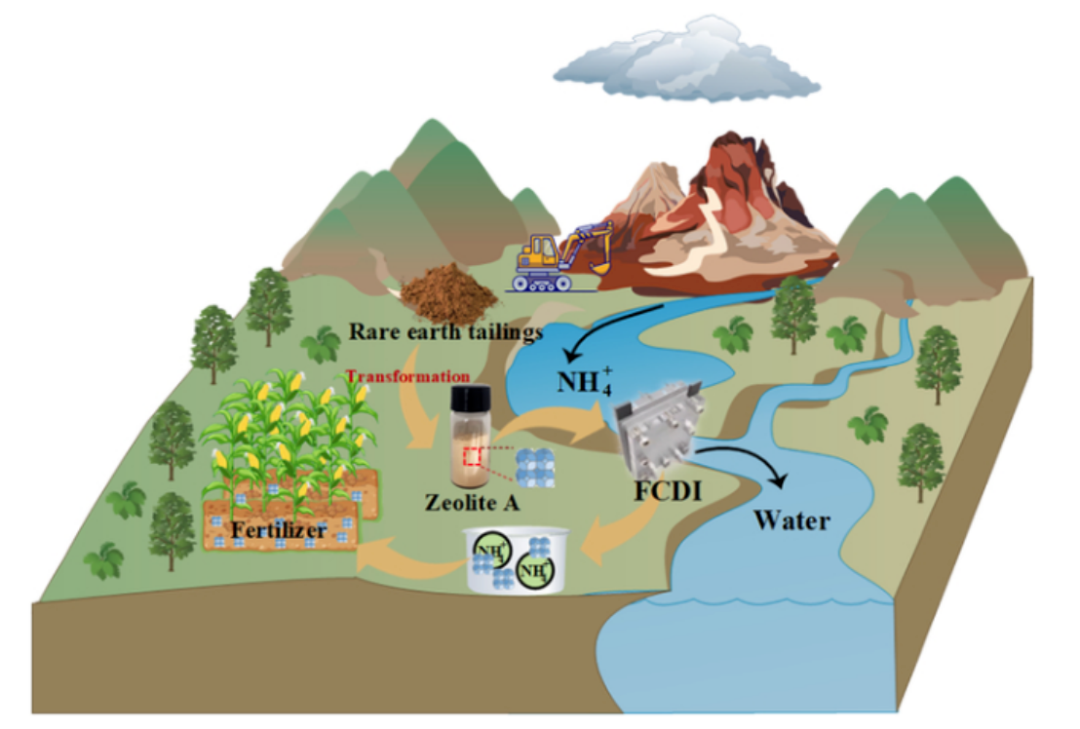
The rare earth mining process generates substantial amounts of tailings and ammonia-nitrogen-rich wastewater. Such wastewater not only causes groundwater contamination and water eutrophication but also leads to the loss of nitrogen resources. This study, starting from natural zeolite materials, proposes converting tailings into conductive zeolites and achieving efficient ammonia nitrogen removal and resource utilization through an electrochemical separation system.
Zeolites, as typical porous aluminosilicate minerals, possess a regular pore structure and exchangeable cationic sites within their framework, endowing them with inherent adsorption and ion-exchange capabilities. Leveraging these structural characteristics, this study involves structural modifications of zeolites to retain their adsorption properties while incorporating conductive properties, thereby making them suitable for electrochemical systems.
II. Material Construction: Conversion of Rare Earth Tailings into Conductive Zeolites
This study utilizes ion-type rare earth tailings from Ganzhou as the raw material to prepare conductive zeolite materials through alkali fusion and hydrothermal reactions. The specific process involves: mixing the tailings with sodium hydroxide and calcining at 700°C; adjusting the silicon-aluminum ratio by adding varying amounts of aluminum powder; followed by hydrothermal reaction, washing, and drying, ultimately yielding conductive zeolite materials with diverse structures.(Al₀.₁、Al₀.₃、Al₀.₅)。
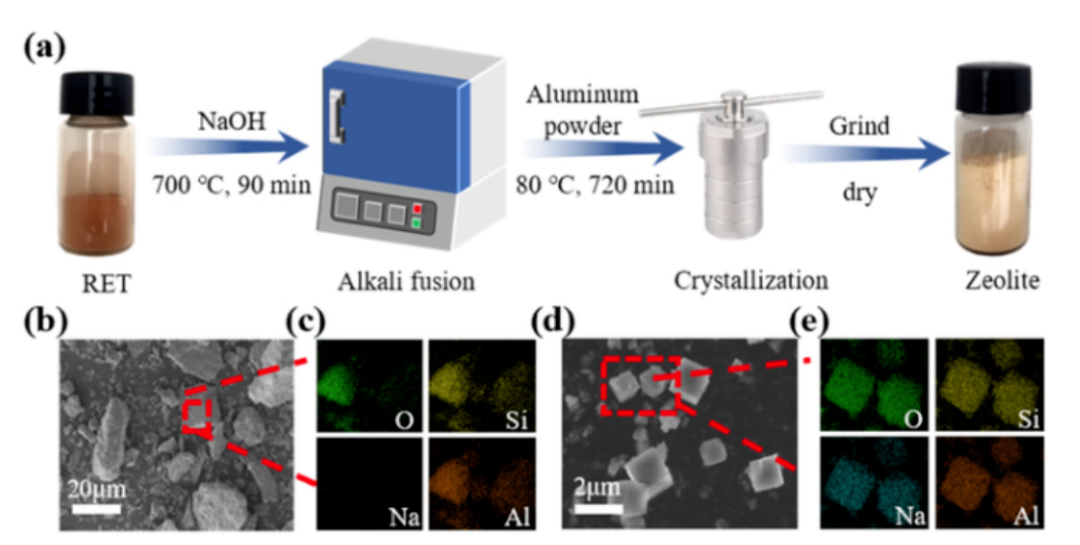
The structural characterization results indicate that the optimal material Al₀.₃ exhibits a regular polyhedral crystal structure, representing a typical Type A zeolite architecture, with uniform distribution of elements such as Si, Al, and Na. This homogeneous crystal structure provides the foundation for its subsequent adsorption and electrochemical performance.
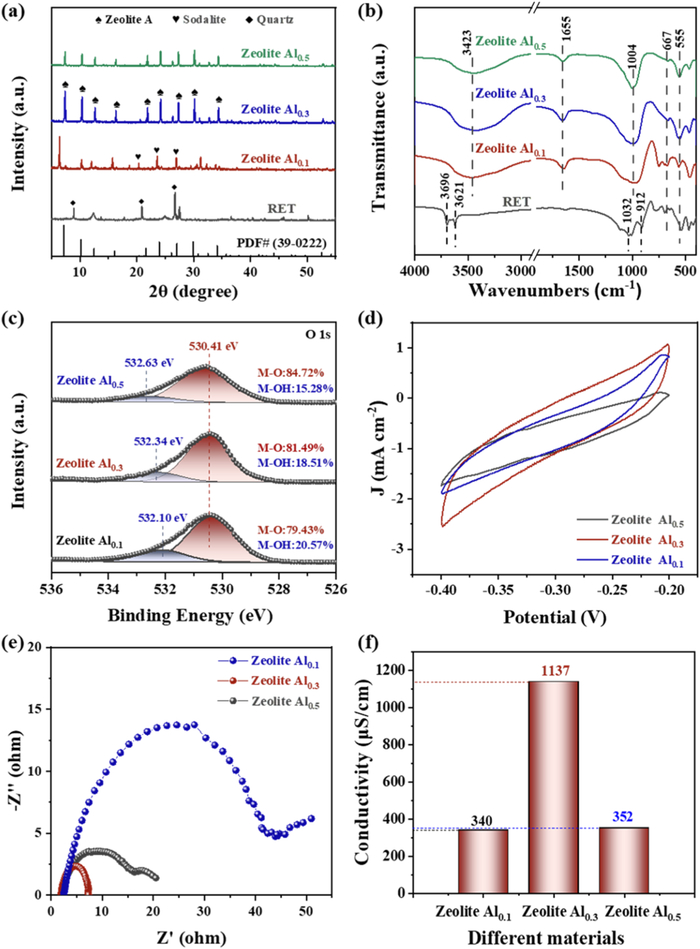
Further XRD and FT-IR analyses confirmed the formation of a zeolite framework. XPS results indicated the presence of a moderate amount of hydroxyl groups (M–OH) on the material surface, a structural feature that enhances hydrophilicity and active site utilization. Concurrently, the introduction of aluminum powder altered the electronic structure of the material, endowing it with conductive properties.
Electrochemical test results demonstrate that the Al₀.₃ conductive zeolite exhibits a specific capacitance of 2.32 F/g and a conductivity of 1137 μS/cm, significantly outperforming other material formulations. This indicates that the structure achieves an optimal balance between adsorption capacity and electrical conductivity.
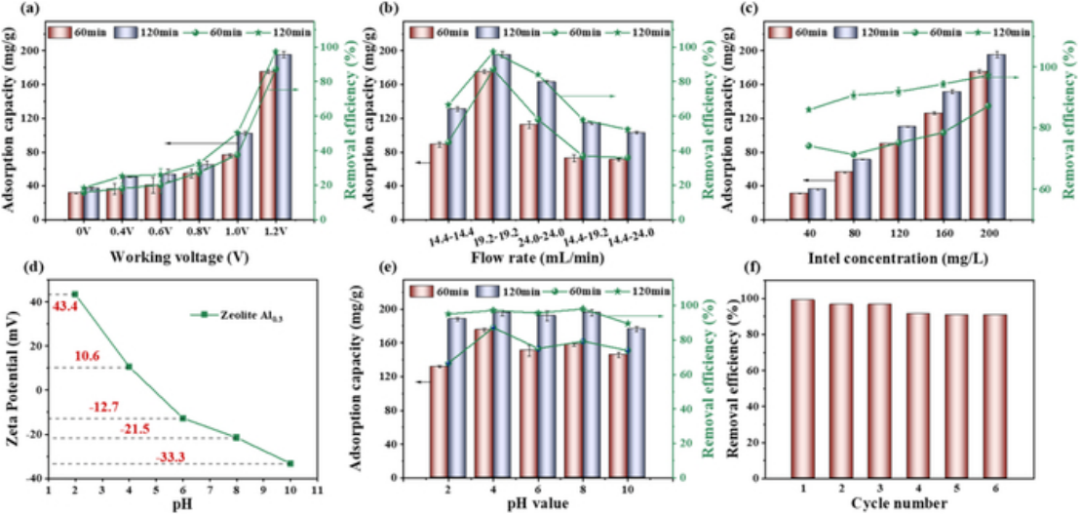
III. Core Performance: Conductive Zeolites Achieve High-Efficiency Ammonia Nitrogen Adsorption
In the Flow Electrode Capacitance Deionization (FCDI) system, conductive zeolite is employed as the electrode material for ammonia nitrogen removal. Through systematic optimization of parameters such as voltage, flow rate, pH value, and initial concentration, the optimal operating conditions were determined as follows: voltage 1.2 V, flow rate 19.2 mL/min, and pH 4.
Under these conditions, the ammonia nitrogen removal rate in the simulated wastewater reached 97.22%, with an adsorption capacity of 195.45 mg/g. These performance metrics significantly outperform those of traditional electrode materials, demonstrating that conductive zeolites exhibit high efficiency in ammonia nitrogen adsorption.
Cyclic experiments demonstrated that after six consecutive adsorption-desorption cycles, the system maintained a removal efficiency of over 90%, indicating excellent regenerative performance and stability of the material. The natural zeolite structure showed no significant degradation during multiple cycles, demonstrating strong engineering applicability.
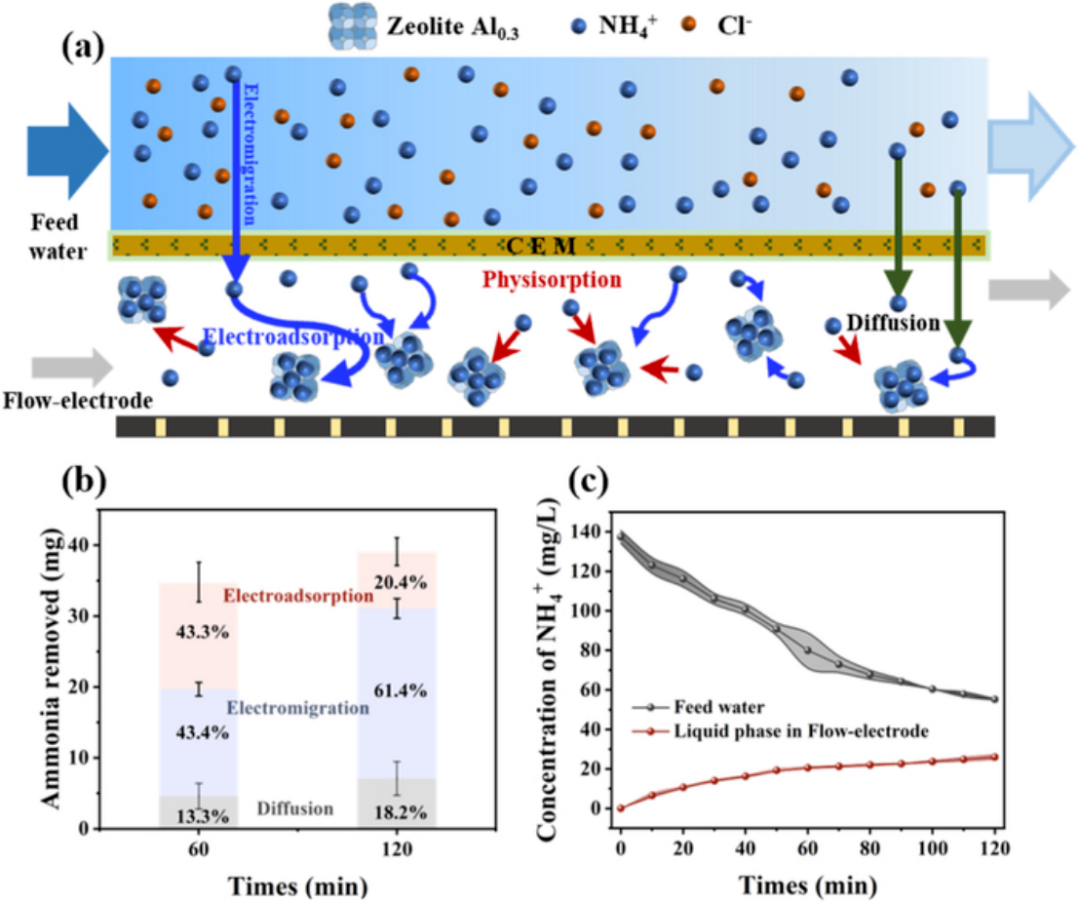
IV. Mechanism of Action: Dominant Ion Migration and Adsorption by Natural ZeolitesThe study elucidated the migration and removal mechanisms of ammonia nitrogen in the FCDI system. The entire process consists of three stages: diffusion, electro-migration, and electro-adsorption, with electro-migration and electro-adsorption being the dominant mechanisms.
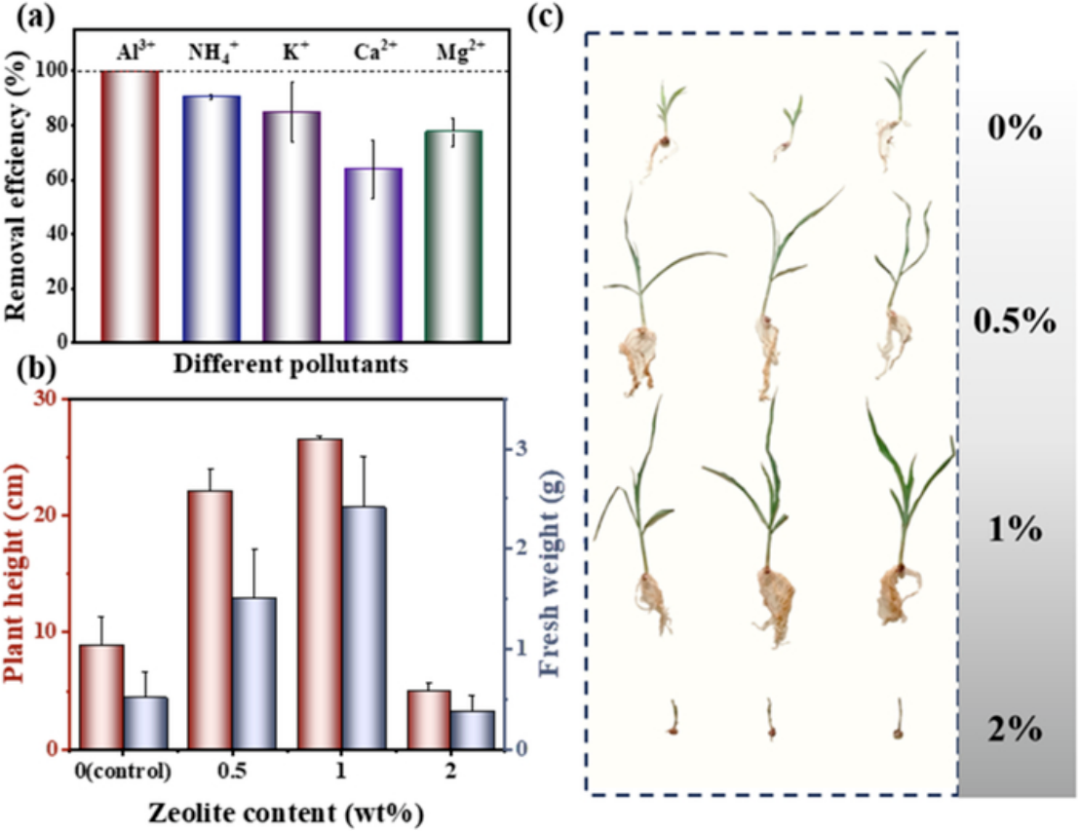
Under the influence of an electric field, NH₄⁺ ions migrate toward the electrode and are captured on the surface of the conductive zeolite. The exchange sites within the zeolite immobilize NH₄⁺ ions through ion exchange and electrostatic adsorption. Quantitative analysis revealed that electromigration contributed 61.4%, electroadsorption contributed 20.4%, and diffusion contributed 18.2%.
In practical mine wastewater treatment, the ammonia nitrogen removal rate reached 90.49% after 2 hours of system operation, with 79.52% of NH₄⁺ being adsorbed and stored by conductive zeolite. This indicates that zeolite plays a core adsorption and enrichment role throughout the system.
V. Resource Utilization: Application of Ammonia Nitrogen-Adsorbed Zeolites as Fertilizers
The study further validated the application potential of conductive zeolite after ammonia nitrogen adsorption in agriculture. Through pot culture experiments with corn, it was found that when 1% conductive zeolite was added to the soil, plant growth exhibited optimal performance, with plant height increasing nearly threefold and root length exceeding twofold.
These results demonstrate that zeolites not only enable the recovery of ammonia nitrogen but also serve as a sustained-release nitrogen fertilizer material. The adsorbed ammonia nitrogen is gradually released in the soil, providing continuous nutrient supply to plants.
Meanwhile, the test results demonstrated that the heavy metal content in the conductive zeolite was significantly lower than the national standard (GB 38400-2019), confirming its safety for agricultural applications.
VI. Summary: The Central Role of Natural Zeolites in the System
This study begins with natural zeolite materials and, through structural modification and conductive enhancement, endows them with both adsorption and electrochemical functionalities in the FCDI system. Within this system, zeolites not only serve as the core component for ammonia nitrogen adsorption and enrichment but also facilitate the transformation of pollutants from carriers into agricultural resources.
Through the process of "tailings preparation – wastewater treatment – fertilizer application," natural zeolite materials undergo multiple functional transformations within a single system, demonstrating their material value in environmental and resource utilization.