Zeolite cooling technology enables energy-saving innovations in data centers
A research team from New York University Tandon School of Engineering has uncovered new potential for harnessing waste heat resources
I. Data Center Cooling Challenges: The Dual Challenges of High Energy and Water Consumption
With the rapid development of the global digital economy, data centers have become critical infrastructure supporting key industries such as the internet, artificial intelligence, and cloud computing. However, the exponential growth of these facilities has led to escalating challenges: high energy consumption and massive cooling demands that urgently require solutions. Against the backdrop of global climate change and energy shortages, data center cooling systems not only consume substantial electricity but also generate significant water consumption, highlighting the limitations of traditional cooling technologies.
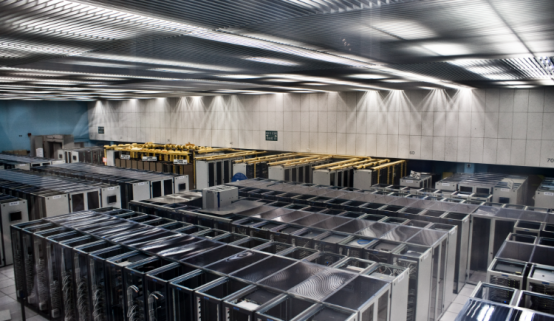
Currently, data centers typically rely on compression chillers to maintain low temperatures. These systems operate using high-power compressors that continuously consume electricity to ensure stable cooling performance. Moreover, many cooling technologies depend on cooling towers to discharge waste heat into the atmosphere, resulting in waste of both energy and water resources.
II. Research Breakthrough: Zeolite-Based Thermal Battery Solution
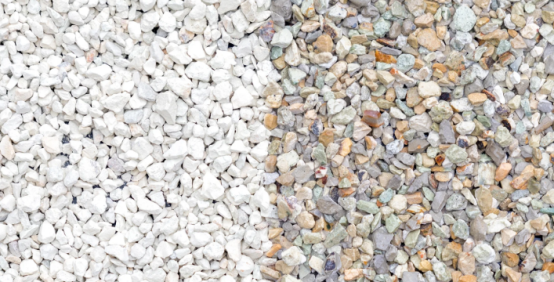
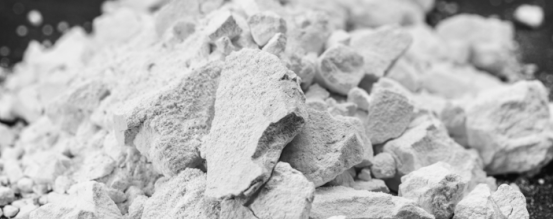
To address this challenge, a research team at New York University Tandon School of Engineering has proposed an innovative cooling solution: utilizing waste heat from local industrial facilities to cool data centers through a device called a thermal battery. The core technology relies on zeolite, a natural mineral widely used in industrial and environmental applications. Zeolite is a porous mineral with a unique structure that allows it to absorb moisture and release heat within its tiny pores. When dry zeolite comes into contact with water vapor, it absorbs moisture and releases heat; when heated to a specific temperature, it releases water vapor and subsequently provides heat for subsequent processes. This heat-water-heat cycle makes zeolite an efficient thermal storage medium capable of storing and releasing waste heat without requiring additional electricity consumption.

III. Utilizing Industrial Waste Heat for Data Center Cooling
The research team's solution utilizes zeolite in thermal storage systems, which are charged using low-temperature waste heat from industrial facilities to enable heat release when needed. The charging process occurs within industrial plants such as chemical plants and refineries, where waste heat below 200°C is employed to heat the zeolite. This heating process causes moisture evaporation from the zeolite. The evaporated water is then recovered, and the charged zeolite is transported to data centers via trucks or railways.

When these charged zeolites arrive at the data center, the entire process reverses. The hot air or coolant (such as water) within the data center comes into contact with the zeolites, which adsorb water vapor and release heat, thereby lowering the ambient temperature. This process not only replaces the compression chillers in traditional cooling systems but also significantly reduces power consumption.
IV. Performance Evaluation and Energy Saving Effects
According to the research team's calculations, this zeolite-based thermal battery cooling solution achieves over 75% total cooling power savings, with the most significant energy savings observed in data center cooling applications—reducing power consumption by up to 86%. From an energy efficiency perspective, the system's overall power utilization efficiency improves by 12%, a notable advancement for the data center industry.
Although water consumption during the cooling process increases (by approximately 15% to 25%), industrial facilities experience a significant reduction in water demand compared to traditional cooling methods, as most of the waste heat is utilized to charge thermal batteries, eliminating the high water consumption associated with cooling towers. Furthermore, the moisture generated during the zeolite charging process can be recycled on-site, thereby minimizing water waste.
V. System Feasibility and Expansion Potential
To evaluate the scalability of this method, the research team conducted geospatial analysis of data centers and industrial facilities across the United States and found that the average distance between a data center and its nearest ten industrial sites was only 57 kilometers. Even when accounting for the energy required to transport zeolites (using modern electric trucks), the system achieved net electricity savings in many cases, sometimes exceeding 40%. Railway transportation further reduced energy consumption.
Although this system demonstrated significant energy-saving potential during the modeling phase, it still faces several engineering challenges. The zeolite bed design must simultaneously meet requirements for durability, rapid heat transfer, and reusable recycling. Furthermore, collaboration between data centers and industrial facilities necessitates new business models and operational coordination. The research team has already begun discussions with several industry leaders regarding the large-scale implementation of this solution.
VI. Conclusion: The Potential of Waste Heat as a Valuable Resource
This study not only provides innovative solutions for data center cooling but also highlights the potential of waste heat as a valuable resource. By redefining cooling challenges as "thermal logistics problems" rather than "power demand issues," zeolite thermal battery technology offers sustainable momentum for data center expansion. With further optimization and widespread adoption of this technology, it is expected to help data centers reduce energy consumption and improve overall efficiency without increasing grid load.