Published in Scientific Reports Aminomodified natural zeolite with pH self-regulation and dual adsorption functions developed by China research team
I. Natural Zeolites-From Volcanic Minerals to "Intelligent Adsorbent"
Globally, the problems of lake blackness and ecological degradation caused by eutrophication are becoming increasingly severe. The latest monitoring data from China's Ministry of Ecology and Environment shows that more than 40% of urban surface water bodies fail to meet the standards for total phosphorus (TP) and chemical oxygen demand (COD). How to achieve the coordinated treatment of "dual pollution" at low cost and sustainably has become a cutting-edge challenge in the field of water environment engineering.
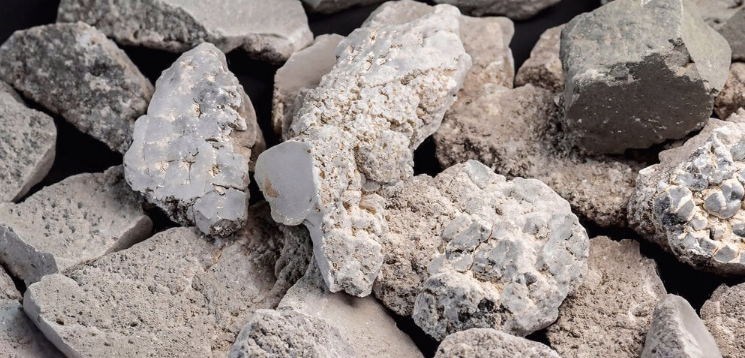
As a kind of natural zeolite mineral with abundant micropore structure, natural zeolite has been used for water purification, soil remediation and gas adsorption for a long time.
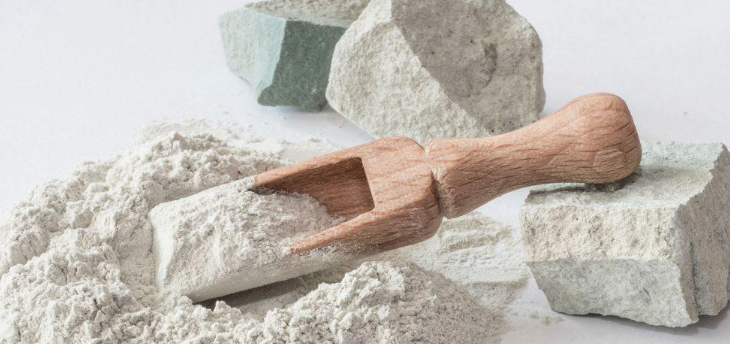
It is widely distributed and abundant in China, especially forming a complete mining, selection, and processing system in Jiangxi, Henan, Liaoning, Yunnan, and other regions. However, traditional zeolites mainly remove cations and have limited adsorption capacity for anion pollutants (such as phosphate and COD organic acids). On November 20,2025, "Scientific Reports" (an open-access journal under Nature) published an original study by the team of Chen Yuneng from Jiangxi University of Science and Technology, titled: "Engineering amine-modified zeolite with pH self-regulation and competitive adsorption selectivity for simultaneous removal of phosphorus and COD" (Scientific Reports, Vol.15, Article No.41082 (2025)). This achievement is regarded as a milestone breakthrough in the functionalization of natural zeolites for environmental applications.
II. Research Highlights: Zeolite Becomes 'Intelligent' to Achieve Dual Removal of Phosphorus and COD
The team endowed zeolites with novel adsorption mechanisms through organic amine functionalization, endowing them with both "electrostatic attraction" and "ion exchange" capabilities. After orthogonal experimental optimization, the researchers identified the optimal modification combination (EPI–DMF–DETA–TEA system) and obtained a novel adsorbent material named AMZ (Amine-Modified Zeolite).
AMZ demonstrates outstanding performance in both simulated and real wastewater systems:
Total phosphorus (TP) removal rate> 90%
Chemical Oxygen Demand (COD) removal rate> 80%
The working pH range is broad (3–10) and can automatically adjust to neutrality (7.2±0.2).
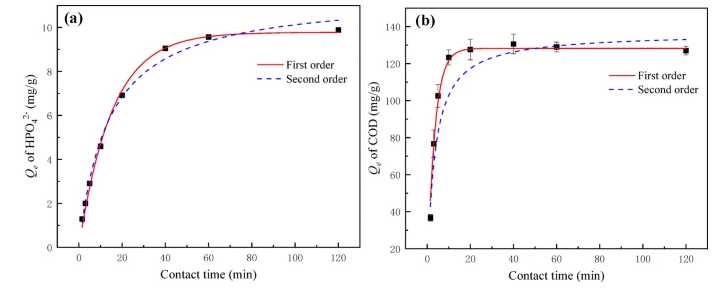
Adsorption equilibrium achieved within 20 minutes, demonstrating high operational efficiency
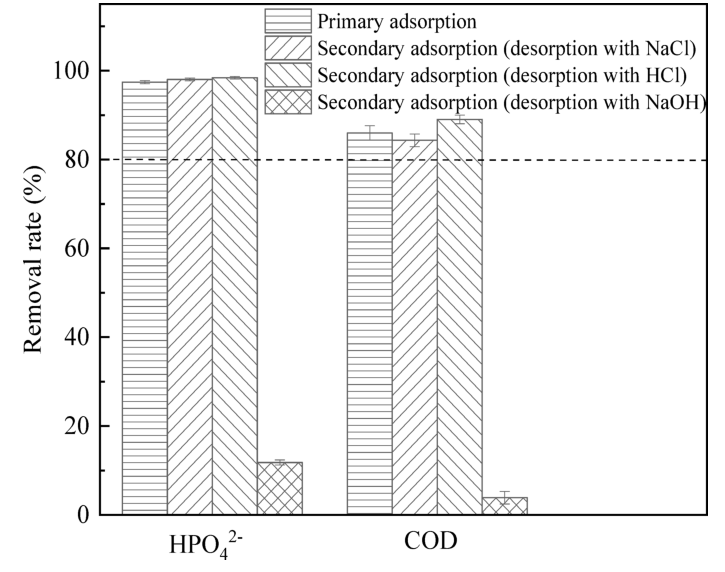
Performance retention rate after multiple cycles of regeneration> 90%
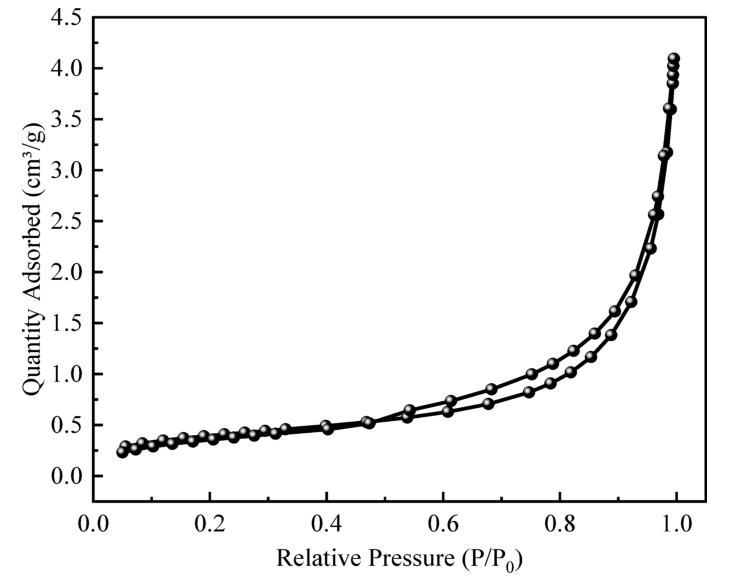
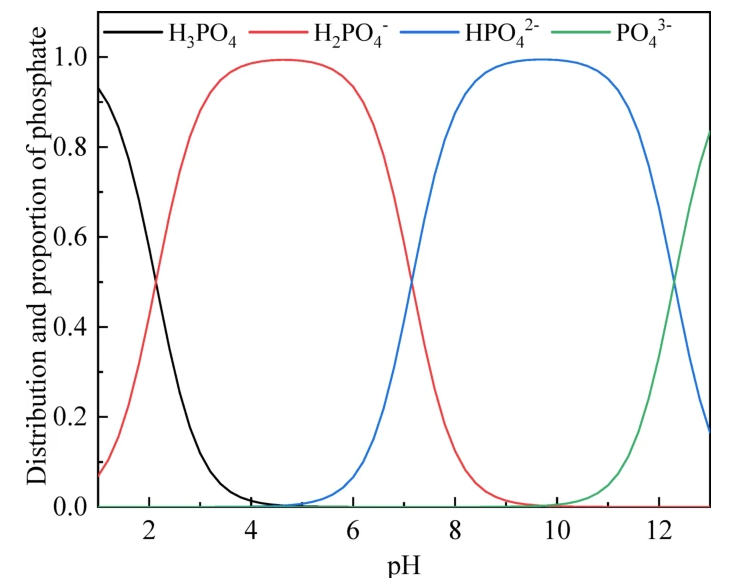
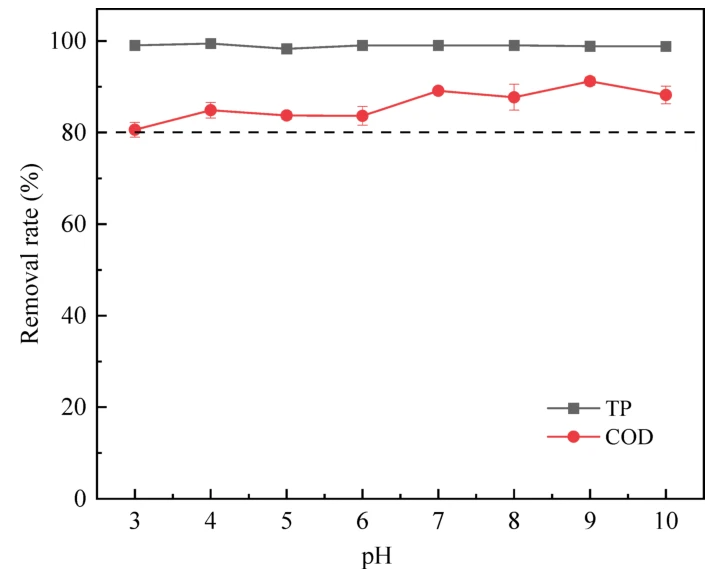
The experimental results demonstrated that under the conditions of TP=1 mg/L and COD=100 mg/L, only 0.6 g/L of AMZ was required for 20 minutes to meet the Class III surface water standard (GB3838-2002), with stable pH in the treated effluent. The adsorption mechanism exhibited dual characteristics: chemical adsorption (binding of phosphate groups to quaternary ammonium groups) and physical adsorption (exchange of organic anions with Cl⁻).
III. Mechanism Revealed: The "Microscopic Logic" of pH Self-Regulation and Competitive Adsorption
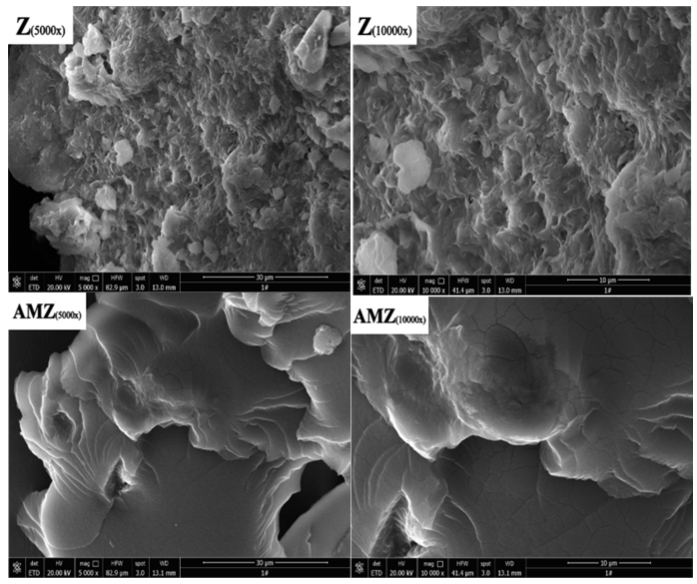
The study revealed the key mechanisms through scanning electron microscopy (SEM), energy dispersive spectroscopy (EDS), and Fourier transform infrared spectroscopy (FTIR). The quaternary ammonium groups (–N⁺R₃) provide electrostatic attraction sites with high affinity for HPO₄²⁻. Surface Cl⁻ carriers remove phthalate (C₈H₅O₄⁻), the main component of COD, via ion exchange. The proton buffering effect of the amino groups enables the material to exhibit "pH self-regulation," automatically maintaining optimal adsorption conditions. Results indicate that electrostatic attraction dominates the mechanism (contributing approximately 80%), with ion exchange playing a secondary role. This suggests that modified natural zeolites can actively regulate local microenvironments to achieve site-selective adsorption of various anionic pollutants, making them a green functional material with "intelligent response" characteristics.
IV. RESEARCH OUTCOMES: FROM DECHLORINATION TO ION REGULATION MAKEMAKE's R&D goes beyond chlorine removal. The company has also developed a core-shell zeolite composite system that can target the adsorption of calcium, magnesium, and copper ions in hard water—key factors affecting dry hair and the absorption rate of skincare products. In simulated hard water conditions, the Zeodualite™ composite zeolite can capture about 90% of Ca²⁺ and Mg²⁺ within 10 minutes, reducing water hardness to below 40 ppm. This data comes from the SOOO.LAB 2025 white paper, which is currently under patent review. Future versions plan to integrate phospholipid-encapsulated biomimetic UV filters with a nano-lipid carrier (NLC) system, utilizing the physical scaffold properties of zeolite pores to achieve targeted release of active ingredients, marking a functional leap from "mineral adsorption" to "active delivery medium."
IV. China's Strength: Research on Natural Zeolite Materials Advances to the International Frontier
This achievement not only represents China's original breakthrough in the field of environmental functional materials, but also demonstrates how the advantages of natural zeolite resources are being transformed into technological strengths. China is one of the countries with the richest reserves of natural zeolite in the world, with reserves exceeding 300 million tons, accounting for more than 40% of the global total. In recent years, Chinese research teams have made a series of progress in the structural design of modified zeolites, the preparation of composite materials, and the modeling of adsorption mechanisms—Jiangxi University of Science and Technology has achieved the first "phosphorus-COD dual synergistic adsorption" in this study; Southern University of Science and Technology and Hohai University are jointly developing "iron oxide-zeolite composite adsorbents" for heavy metal remediation; enterprises such as Panbao Group are promoting the industrial application of zeolites in livestock breeding deodorization and sewage recycling. This "research-industry-ecology" tripartite development path is accelerating China's transformation from a major country in zeolite resources to a technological powerhouse in zeolite.
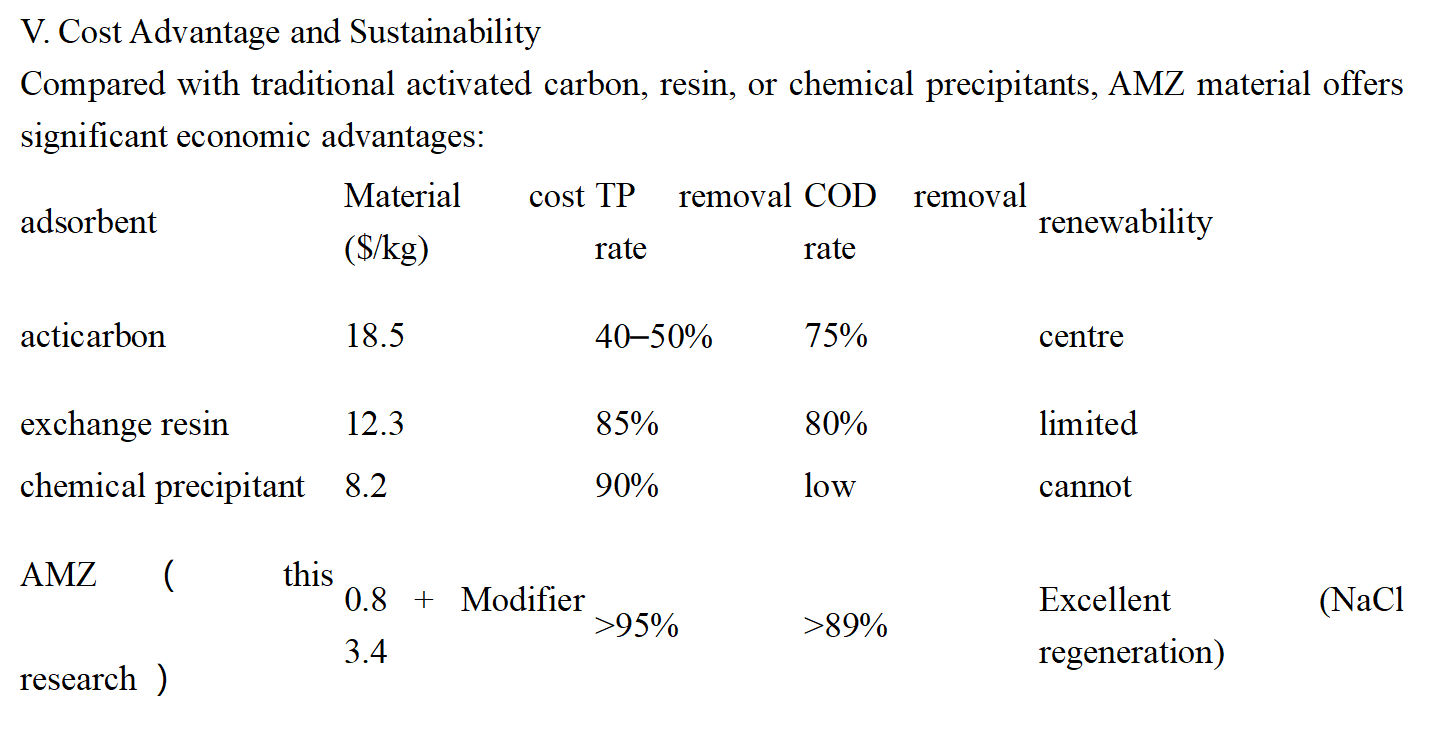
With operating costs as low as 1/20 to 1/50 of mainstream adsorbents, AMZ enables multiple cycles of reuse, fully aligning with the green governance approach of 'low-carbon, renewable, and replicable'.
VI. Scientific Significance and Prospects
The study first proposed the concept of a "pH self-regulating zeolite adsorption system," addressing the challenge of unstable efficiency in traditional adsorbents affected by environmental fluctuations. This design approach may be extended to complex pollution systems such as ammonia nitrogen, nitrates, heavy metals, and organic pesticides. Professor Chen Yuneng stated: "Our goal is not to recreate expensive laboratory materials, but to return natural zeolites—this resource abundant in China—to nature in a smarter and greener way." Future team plans include: verifying the long-term operational performance of AMZ in complex watersheds and black-odor river remediation; investigating its coupling potential with systems such as biofilters and constructed wetlands; and promoting its industrial preparation and modular field applications.
VII. Conclusion: The "China Route" of Natural Zeolites
From volcanic ash to intelligent adsorbents, natural zeolites are undergoing a green transformation. This innovative research led by China's scientific team not only expands the functional boundaries of zeolites but also provides a scalable and low-carbon paradigm for global water environment remediation. In the future, when environmental engineering discusses "renewable adsorbent materials," natural zeolites will no longer be just a mineralogical term but an ecological engine activated by science.