When Volcanic Minerals Meet Beauty Technology: Natural Zeolite Ignites Korean Chemical Beauty Revolution
From Ore to Beauty: The Cross-boundary of Zeolite's "New Scientific Beauty"
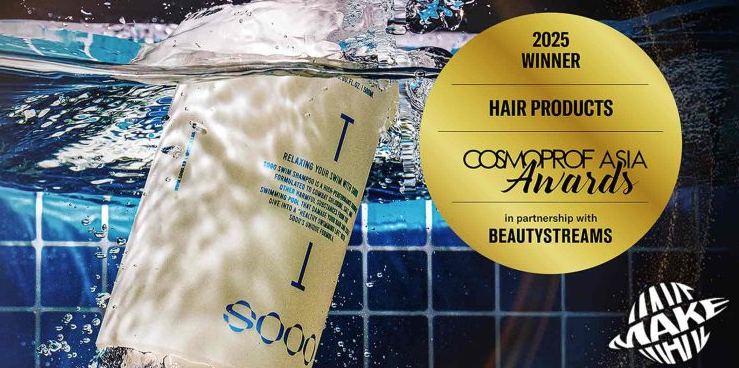
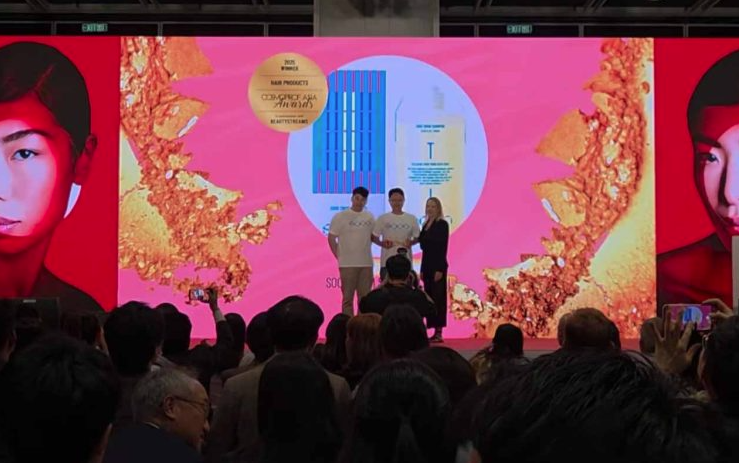
On November 14,2025, South Korean startup MAKEMAKE Inc. won the annual Haircare Award at Cosmoprof Asia 2025 in Hong Kong under its brand SOOO, becoming the only Korean brand to achieve this distinction. This honor not only celebrates a startup's success but also highlights South Korea's rise in chemical technology-driven beauty innovation.
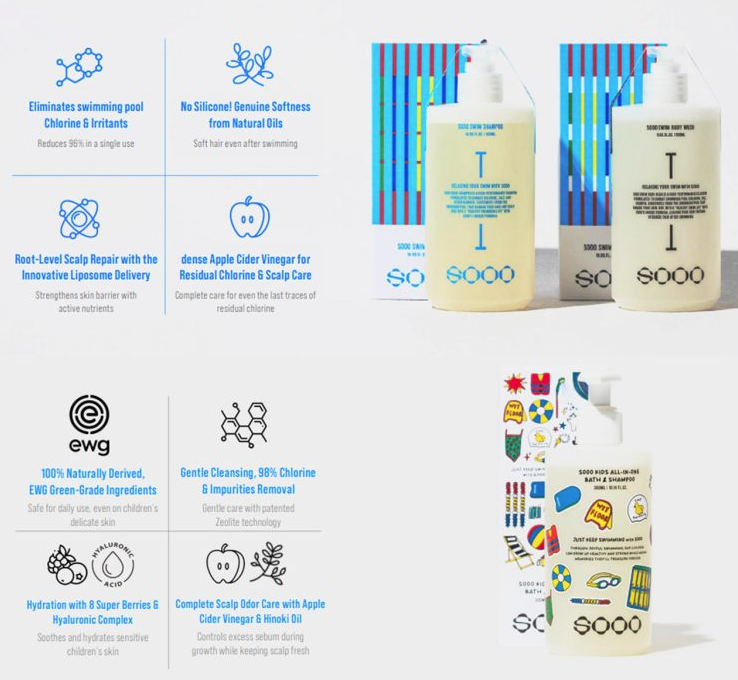
SOOO's award-winning product is a functional skincare line specifically designed for swimmers, featuring a core technology based on Zeodualite™, a composite chlorine-removing material. The prefix' Zeo- 'in its name derives from Zeolite—a natural porous mineral formed by volcanic ash reacting with alkaline water. While zeolite's molecular sieve structure has long been used in catalysis, adsorption, and purification, it is now being redefined as a 'molecular purifier' in beauty technology. 'We must remove harmful components before adding beneficial ones,' said Kim Sok-won, Chief Growth Officer of MAKEMAKE.
2. Scientific Principle: Zeolite Becomes a "Smart Chlorine Removal Body"
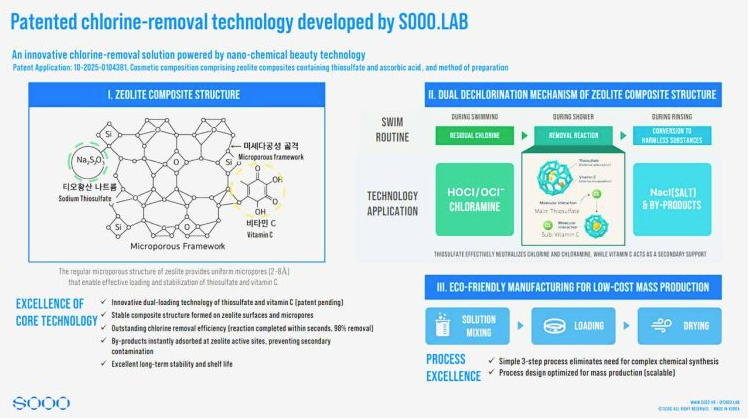
The core of SOOO's patented technology is a composite system embedded in a zeolite lattice—Zeodualite™. According to data from MAKEMAKE, this composite material combines two components: thiosulfate, which reacts with chlorine in swimming pools to form harmless salts, and vitamin C (ascorbic acid), which further reduces residual chlorine and neutralizes oxides. Both are encapsulated within a microporous zeolite framework, where they work through a dual mechanism of physical adsorption and chemical reaction to gradually release their reducing activity, enabling instant molecular-level chlorine removal upon use.
According to the company's internal DPD standard tests, Zeodualite™ material can remove up to 98% of residual chlorine and seawater pollutants without relying on silicone oil or synthetic surfactants, achieving a rare balance between performance and sustainability. This design philosophy directly demonstrates the potential of zeolite materials in personal care chemistry: it is not just a "filter" but also a "reaction field" — an intelligent mineral system that dynamically regulates the interaction between skin and chemicals.
III. Technological Transformation: From Industrial Adsorbents to Cosmetic Functional Materials
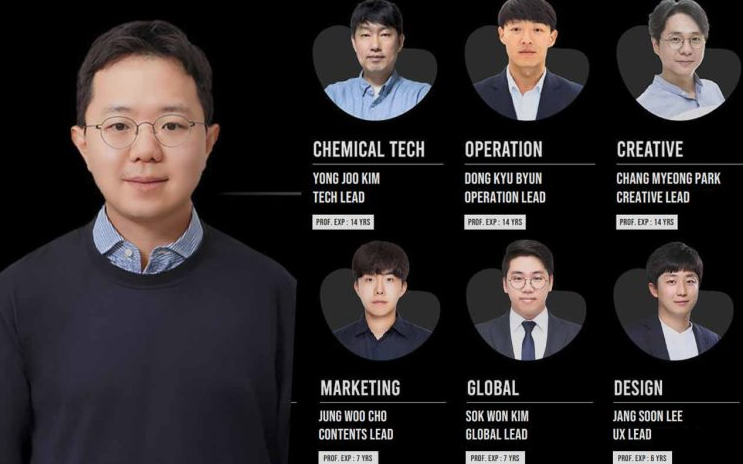
Zeolites have a long history of application, but traditional uses have focused on gas separation, catalysis, and wastewater treatment. MAKEMAKE's breakthrough lies in: achieving the functionalization and large-scale production of zeolite composite materials for the first time in consumer-grade cosmetics; completing material design, patent writing, and low-temperature preparation process development within its self-built laboratory SOOO.LAB; developing a three-step scalable process route that can uniformly embed small organic molecules into zeolite pores at room temperature, significantly reducing production energy consumption and costs. This means that SOOO is not just a hair care brand but also a chemical technology incubation platform centered on zeolites. The company's R&D team includes Kim Yong-joo, a Ph.D. in materials science from the École Polytechnique Fédérale de Lausanne (EPFL) in Switzerland, who has participated in semiconductor surface passivation research and introduced nanoscale mineral encapsulation mechanisms into consumer product formulations.
IV. RESEARCH OUTCOMES: FROM DECHLORINATION TO ION REGULATION
MAKEMAKE's R&D goes beyond chlorine removal. The company has also developed a core-shell zeolite composite system that can target the adsorption of calcium, magnesium, and copper ions in hard water—key factors affecting dry hair and the absorption rate of skincare products. In simulated hard water conditions, the Zeodualite™ composite zeolite can capture about 90% of Ca²⁺ and Mg²⁺ within 10 minutes, reducing water hardness to below 40 ppm. This data comes from the SOOO.LAB 2025 white paper, which is currently under patent review. Future versions plan to integrate phospholipid-encapsulated biomimetic UV filters with a nano-lipid carrier (NLC) system, utilizing the physical scaffold properties of zeolite pores to achieve targeted release of active ingredients, marking a functional leap from "mineral adsorption" to "active delivery medium."
V. Policy and Ecology: A Case Study of the "Deep Tech" Beauty Ecosystem in South Korea
MAKEMAKE's success stems from South Korea's robust tech incubation ecosystem, having been selected for the TIPS Tech Startup Accelerator, KICXUP Seoul Incubation Program, and K-Unicorn Academy 2025. These programs provide early-stage tech startups with funding, patent guidance, and global market access. "MAKEMAKE is not just a cosmetics company—it's a chemical enterprise with material innovation capabilities," remarked a partner at Bluepoint Partners. Its growth trajectory mirrors structural shifts in South Korea's startup landscape: from OEM-dependent manufacturers to tech companies centered on material science and intellectual property.
VI. The Future of Zeolite: From Industrial Material to "Beautiful Reactor"
MAKEMAKE's Zeodualite™ composite system demonstrates zeolite's novel potential in beauty, health, and eco-friendly chemistry. Key features include: Smart adsorption through ion-regulated structures for selective reactions; Green manufacturing that eliminates high-temperature calcination to reduce carbon emissions; Biocompatibility with non-toxic, biodegradable minerals; and Cross-domain integration as a unified material platform for skin care, air purification, and water treatment. From soil remediation to hair care, from industrial gases to life-sustaining molecules, natural zeolites are emerging as a new 'chemical interface' between humanity and the environment.