Natural zeolite: a "mineral wonder" for healthier shrimp-revealing the potential of functional minerals in aquatic feed by a Korean team
1. New Proposition of Green Breeding: Seeking Natural Solution of "Health Without Medicine"
As the global aquaculture industry rapidly expands, reducing antibiotic dependence, improving feed conversion rates, and protecting aquatic ecosystems have become industry consensus. Researchers are exploring a low-cost, renewable, and environmentally friendly alternative material—natural mineral feed additives. In December 2025, the journal *Biology* published a study jointly conducted by Korea's Gunsan National University and Taian Dasha Aquaculture Co., Ltd. This research systematically compared three natural silicate minerals—bentonite, zeolite, and illite—as feed additives on the growth and health of Pacific white shrimp (*Litopenaeus vannamei*). The results were remarkable: among the three minerals, zeolite demonstrated robust environmental regulation capabilities, while illite showed the most significant growth-promoting and health-enhancing effects.
2. Experimental Design: From Laboratory to "Micro-ecological Farming"
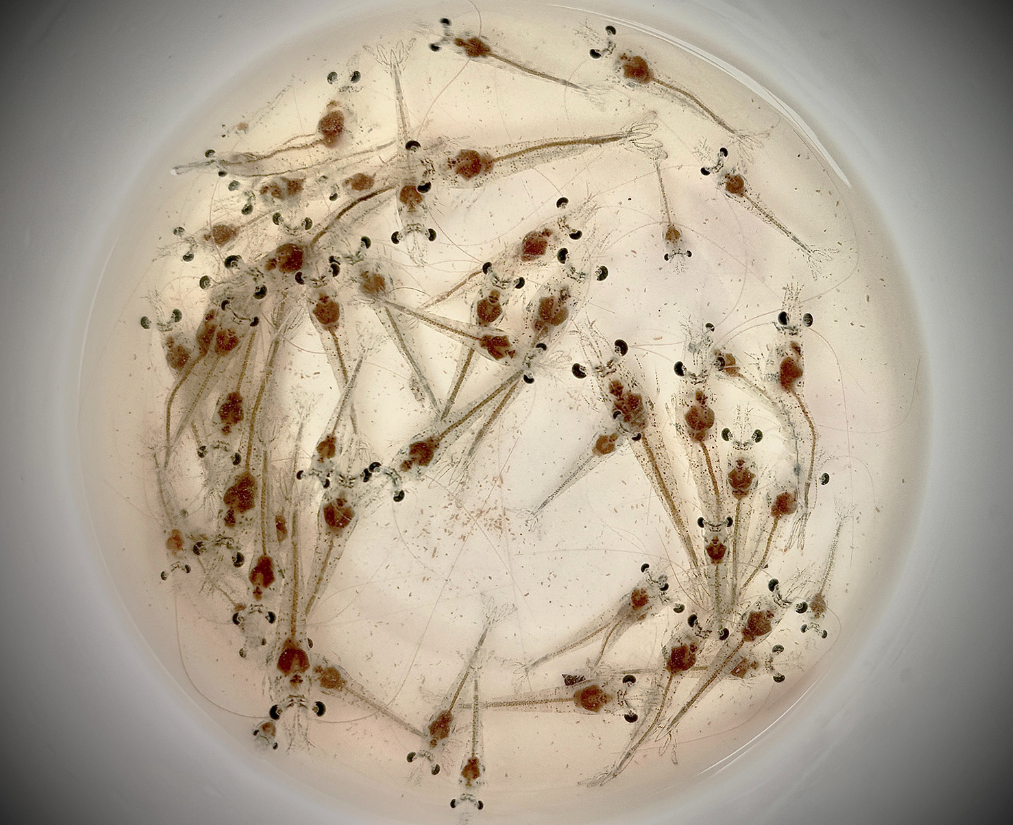
The research team procured healthy juvenile shrimp (average weight 0.02 grams) from commercial shrimp farms in Taean, South Korea, and conducted a 9-week feeding experiment at the Aquaculture Experimental Center of Gunsan National University.
Experiment setup: 12 independent tanks(50 L), 20 shrimp in each tank, 4 groups of diet(control, bentonite group, zeolite group, illite group), 3 times in each group.
The feed composition of each group was kept isonitrogen (35% crude protein) and isoenergy (about 17 MJ/kg), and 5% mineral powder was added by replacing 5% starch.
The replacement ratio is considered to be able to detect the actual effect of mineral additive under the premise of ensuring the stability of particles.
3、Core findings: Natural minerals make shrimp stronger and healthier
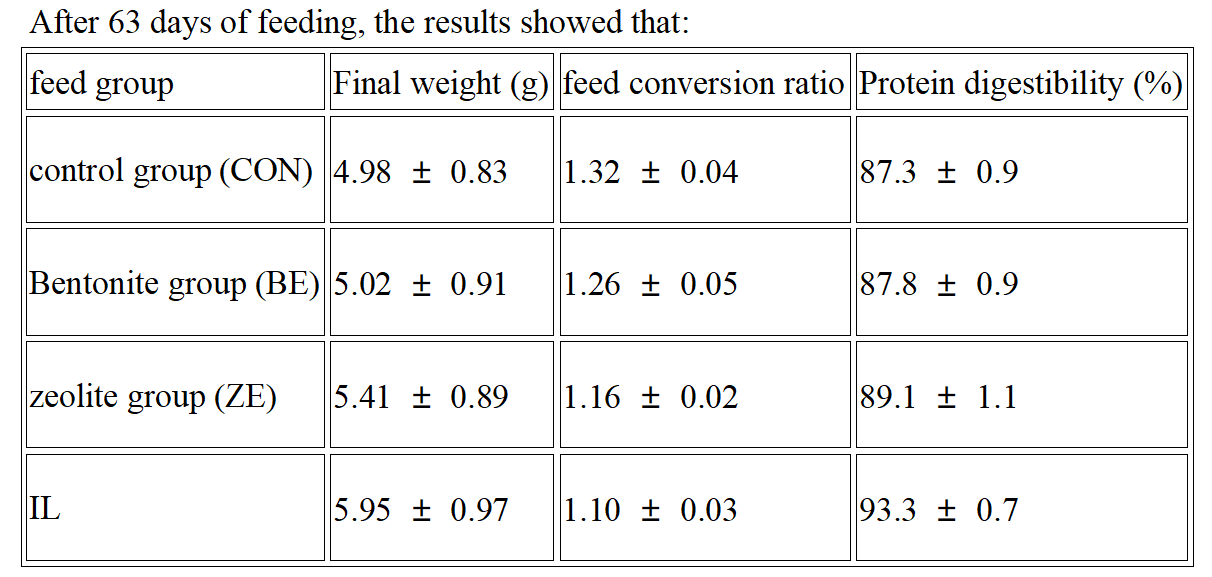
The results demonstrated that zeolite enhanced feed utilization efficiency and stabilized water quality, while illite showed optimal performance in promoting shrimp weight gain, improving protein absorption, and boosting antioxidant capacity. Bentonite exhibited relatively moderate effects, primarily demonstrating protective functions under stress or toxin exposure. Researchers noted that zeolite's microporous structure adsorbs harmful substances like ammonia nitrogen and sulfides, maintaining pond water balance and alleviating intestinal stress. Illite, on the other hand, indirectly enhances immunity and improves digestion by supplying trace minerals and optimizing gut microbiota.

IV. The "Cultivation Value" of Zeolite: From Adsorbent to Ecological Regulator
As a natural aluminosilicate mineral, zeolite's unique properties—its porous structure, ion-exchange capacity, and pH buffering—offer exceptional value in aquaculture. It adsorbs and purifies water by removing ammonia, heavy metals, and organic toxins. Its ion balance function stabilizes pH fluctuations in aquaculture water, reducing stress responses. Additionally, it regulates gut health by adsorbing irritants and stabilizing microecology, thereby enhancing digestion and absorption. The feed stabilization effect improves particle hardness and water dispersibility, minimizing nutrient loss. Thus, natural zeolite is not merely an "inorganic filler" but a "hidden regulator" in aquatic ecosystems.
V. RESEARCH SIGNIFICANCE: THE SUSTAINABLE PATH FROM "GREEN MINERAL" TO "BLUE ECONOMY"
This study demonstrates the potential of natural minerals in sustainable aquaculture: replacing certain chemical feed additives, reducing antibiotic and synthetic hormone use, supporting immune, digestive, and stress resistance through physicochemical mechanisms, improving feed utilization efficiency, lowering production costs, and mitigating pollution to promote eco-friendly farming. "Mineral feed additives are not medicines, but an ecological strategy," stated Soohwan Kim, the paper's lead author from Korea's Gunsan National University. The team also emphasized that zeolite mineral applications require controlled addition ratios (typically 0.5%–4.5%) and species-specific validation to prevent the "nutrient dilution effect."
VI. Future Outlook: The "Ecological Extension" of Natural Zeolites
The study outlines three key future directions: 1) Mechanistic research: Further exploration is needed to elucidate zeolite's molecular mechanisms affecting gut microbiota, immune pathways, and oxidative stress; 2) Long-term environmental impact: Assessing mineral retention in tissues and cumulative effects on aquaculture water systems; 3) Ecological integration: Developing a "mineral-ecosystem symbiosis" model by combining biofilters with recirculating aquaculture systems (RAS). This approach will transform natural zeolite from a conventional adsorbent into a multifunctional ecological material, playing a pivotal role in building the "Blue Granary".