Natural zeolite: a new "invisible armor" for shielding electromagnetic radiation
From Daily Radiation to Invisible Protection: A New Scientific Direction
With the rapid expansion of wireless communication, radar, electric vehicles and satellite systems, electromagnetic waves have become the "invisible infrastructure" of modern society. However, their side effects cannot be ignored. High-intensity electromagnetic radiation not only may interfere with electronic devices but also raises ongoing concerns about the health risks of prolonged human exposure.
In November 2025, the journal *In Compliance* reported a groundbreaking study from the University of Connecticut. Led by Associate Professor Julia Valla, the research team is investigating the use of porous minerals like natural zeolites to absorb and attenuate electromagnetic radiation. Funded in part by the U.S. Air Force Office of Scientific Research (AFOSR), this project aims to develop a lightweight, highly efficient, and renewable wave-absorbing material to protect military equipment and civilian infrastructure from high-power electromagnetic interference.
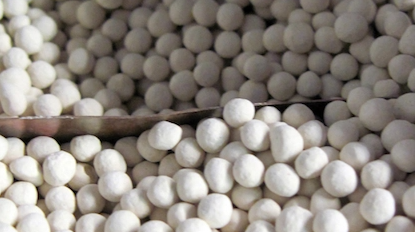

Background of the Research: The Porous Structure of Zeolite May Become a "Electromagnetic Absorption Sponge"
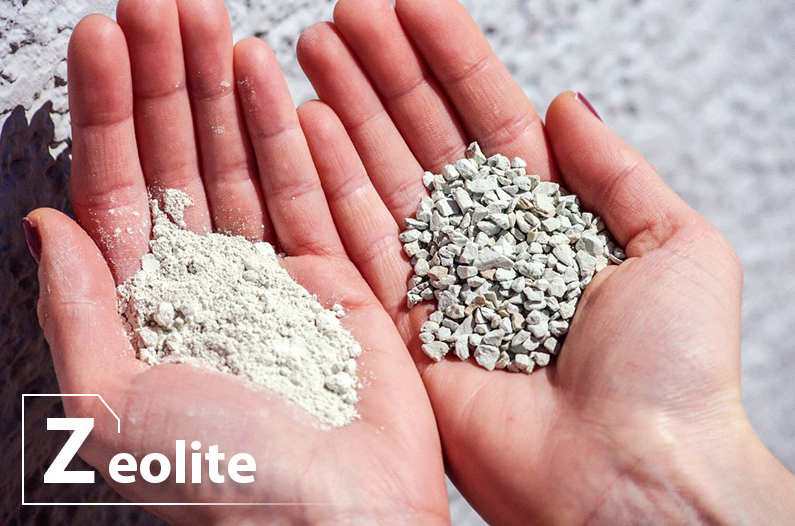
Natural zeolites are crystalline aluminosilicate minerals formed through prolonged reactions between volcanic ash and alkaline water. Their nano-scale pore networks enable selective adsorption of gas or liquid molecules. Over the past decades, zeolites have been pivotal in water purification, gas separation, livestock feed, and catalytic reactions. The research by the Wala team has pioneered a novel application of this material—electromagnetic absorption. The ion exchange sites (e.g., Na⁺, Ca²⁺, Mg²⁺) and polarized structures within zeolite's crystal framework allow dielectric loss and ionic polarization under electromagnetic fields, converting part of the electromagnetic energy into heat or storing it within the lattice.
The porous framework and ionic structure of zeolites endow them with inherent electromagnetic response potential. We are investigating the structural differences and exploring how to optimize them through microscale engineering for effective wave-absorbing materials. -Julia Valla, Department of Chemical and Biomolecular Engineering, University of Connecticut
RESEARCH METHODS: A systematic comparison of four zeolite structures
As reported in the original article by UConn Today in mid-October, the Wala team is currently evaluating the electromagnetic wave absorption properties of four typical zeolite structures.
Octahedral Zeolite
Mordenite zeolite
Trans-Mordenite Framework
Linde Type A zeolite
Researchers evaluate the shielding and wave-absorbing capabilities of various zeolite samples by measuring their Absorption Coefficient, Reflectivity, and Transmittance under high-frequency electromagnetic waves. The team also plans to modify the ionic composition, pore size, and lattice orientation of these minerals at the microscopic level to achieve "directional wave-absorption" properties. This research not only spans material science but also bridges electromagnetics and engineering applications, potentially providing novel protective materials for radar systems, telecom base stations, and even military aircraft.
Military and Civil Dual Value
Funded by the U.S. Air Force Office of Scientific Research (AFOSR), this project focuses on developing lightweight non-metallic radar-absorbing materials to address the challenges of increasingly complex electromagnetic warfare environments. Compared to traditional metallic shielding layers, natural zeolites demonstrate three key advantages: Lightweight: Their low density makes them ideal for aerospace applications. Regenerable: They can be easily recycled without complex chemical processes. Environmentally friendly: They eliminate risks of metal corrosion and exhaust emissions. Heat-resistant: They maintain structural integrity even under extreme temperatures. The Wala research team believes that these mineral-based radar-absorbing materials could be used not only in military vessels and aircraft but also in 5G communication devices, radiation protection for household appliances, and medical imaging systems.
SCIENTIFIC PROSPECTS: FROM NATURAL ORE TO "FUNCTIONAL COMPOSITE ABSORBER"
The next phase of this research will integrate ion exchange modification with nanocomposite strategies to introduce metal ions or carbon-based conductive layers onto zeolite surfaces, thereby enhancing their dielectric loss and magnetic loss capabilities. If successful, natural zeolites could emerge as a new generation of "low-cost electromagnetic shielding materials" following carbon nanotubes and ferrites. This marks a groundbreaking technological approach—using natural materials to address electromagnetic pollution in modern technology. "Zeolites originate from Earth and can protect it," concluded the research team from UConn's School of Engineering.
The Resonance between Nature and Technology
From volcanic sediments to electromagnetic shielding, zeolites 'remarkable journey across disciplines reveals the boundless potential of natural materials. The University of Connecticut's groundbreaking research not only pioneers new approaches to electromagnetic protection but also demonstrates how sustainable materials science is emerging as the cornerstone of next-generation defense technologies. As the researchers aptly put it: "Sometimes, the most advanced technological solutions lie hidden within the oldest minerals."
References
1.In Compliance Magazine, Nov. 5, 2025, “UConn Researchers Explore Ways to Reduce Electromagnetic Wave Radiation.”
2.University of Connecticut Today, Oct. 2025, “Exploring Zeolite-Based Materials to Absorb Electromagnetic Radiation.”
3.Air Force Office of Scientific Research (AFOSR) Research Program Database, 2025.
4.Julia Valla, Department of Chemical & Biomolecular Engineering, University of Connecticut, Project Abstract 2025.