Zeolite, making the dishwasher truly "dry"
—How Bosch Innovates Kitchen Technology
In modern kitchens, dishwashers have become a symbol of efficient living. Yet many users still face an awkward reality: dishes, though thoroughly cleaned, remain damp. The persistent water droplets on plastic cups and food containers often require re-wiping. As consumers increasingly prioritize energy efficiency, hygiene, and convenience, major brands are driving a 'drying revolution.' In this quiet technological race, German appliance brand Bosch pioneered the use of natural zeolite—a seemingly ordinary volcanic mineral—within dishwashers, introducing an innovation dubbed 'magic drying.'
Over the past few decades, dishwashers have primarily offered three drying methods:
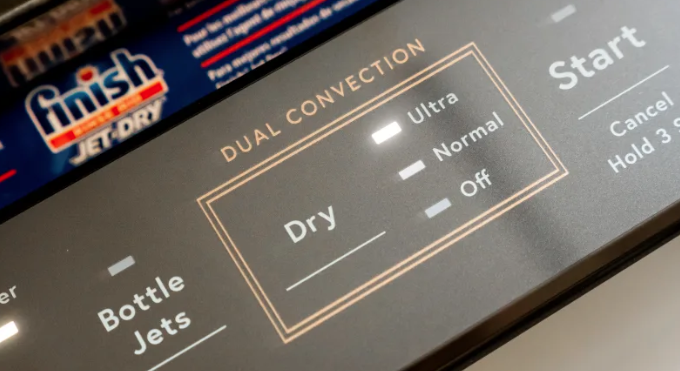
Electrical heating element drying: Utilizes high-temperature evaporation to remove moisture, but is energy-intensive and prone to plastic deformation. Evaporative drying: Harnesses high-temperature steam for natural condensation, which is energy-efficient but slow. Hot air circulation drying: Fans deliver hot air to accelerate evaporation, offering better energy efficiency but still struggling to thoroughly dry plastics. While these methods can make tableware appear "dry," they fail to achieve true "completeness." Due to poor thermal conductivity, plastic containers always dry last. Thus, Bosch engineers began searching for a material that could actively absorb moisture while releasing heat. The answer lies deep within the Earth's crust—natural zeolite.

II. The Secret of Zeolite: Absorbing Water, Releasing Heat, and Reabsorbing Water
Zeolites are a class of naturally occurring or synthetic aluminosilicate minerals with a honeycomb-like nano-scale porous structure. Their most distinctive feature is the ability to release heat when absorbing moisture and re-dry when heated, enabling a self-sustaining cycle. Bosch has integrated this "molecular-level reaction" into the Zeolith® drying module at the bottom of its dishwashers. When the washing cycle concludes and the chamber remains filled with humid air, the air is directed into the zeolite chamber. As the zeolites absorb moisture, they release thermal energy, which is then circulated back to the washing space by a fan, creating a natural energy cycle.
The results are remarkable: energy consumption is reduced by approximately 20%; drying speed increases by over 30%; plastic products can be fully dried; and the system lifespan exceeds that of the machine itself, as zeolite remains unexhausted. This self-circulating process requires no additional heating elements or noise—achieving the entire drying cycle solely through the mineral's physical properties.
The national "antibiotic-free product certification" not only serves as an authoritative endorsement of Panbao's technical system, but also signifies high recognition of its achievements in standardizing and scientifically developing ecological aquaculture. Panbao's successful practices provide verifiable and replicable green models for the high-quality development of China's marine and freshwater aquaculture industries. Furthermore, it contributes the "Panbao Solution" to achieving China's agricultural "dual carbon" goals and advancing the modernization of aquaculture.
III. From Material Science to Home Appliance Innovation
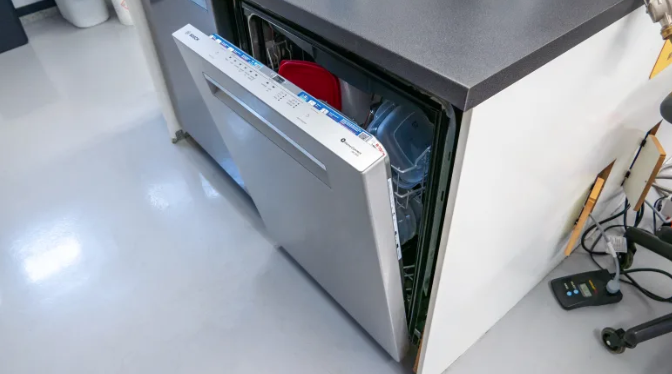
Bosch didn't invent zeolite's applications out of thin air. In fact, zeolite has been widely used in chemical, agricultural, and environmental fields for its high cation exchange capacity and gas adsorption properties. It can capture ammonia, adsorb carbon dioxide, and even be used in nuclear waste treatment and air purification. Bosch's innovation lies in transforming industrial adsorption technology into household energy systems. It made dishwashers the first to achieve "self-powered materials" – using heat generated from moisture absorption to replace electric heating. This isn't just a breakthrough in drying technology, but also represents the practical implementation of energy reuse. Bosch officially named this technology PerfectDry with Zeolith®, fully equipped in high-end models like the 800 series. Authoritative testing agencies point out that Bosch's Zeolith® dishwashers perform best in all tested drying modes – even plastic tableware can achieve "instant dryness upon contact."

IV. The Future of Sustainable Kitchens
Unlike conventional methods of simply increasing temperature or power, zeolite technology has ushered dishwashers into the era of passive energy efficiency. These appliances harness moisture to self-heat without requiring additional electricity, operate entirely without chemical additives by leveraging the physical properties of minerals, and can function stably for over a decade through recycling. This innovation not only makes dishwashing more eco-friendly but also eliminates the need for dishcloths and water residue. More importantly, it demonstrates a trend: future home appliance innovations will increasingly rely on material science rather than mere mechanical design.
V. Conclusion: When Minerals Enter the Kitchen
From aluminosilicates in geological strata to drying systems in smart kitchens, zeolite's journey epitomizes the fusion of technology and nature. It redefines our understanding that technological progress doesn't necessarily stem from silicon wafers but can emerge from ordinary minerals. When Bosch harnesses zeolite to enable dishwashers to "self-heat," we may be witnessing a new paradigm: in this era of energy conservation and emission reduction, home appliances are evolving beyond mere intelligence to become more nature-savvy.