Natural zeolite improves soil cation exchange capacity: new evidence for reducing nitrogen emissions and improving nitrate retention
'antibiotic-free product certification'
The application of nitrogen fertilizers remains a cornerstone of modern agriculture for maintaining high yields, yet their utilization efficiency has long been suboptimal. With the global average nitrogen use efficiency (NUE) still below 50%, approximately half of the applied nitrogen is not absorbed by crops but instead escapes into the environment through ammonia volatilization (NH₃), nitrous oxide emissions (N₂O), and nitrate leaching (NO₃⁻). These processes not only waste fertilizer resources but also contribute to ecological challenges including air pollution, water eutrophication, and greenhouse gas emissions. Among various nitrogen fertilizers, urea remains the most widely used due to its cost-effectiveness and high nitrogen content, though it is highly susceptible to volatilization under high-temperature, dry, or alkaline conditions. Enhancing nitrogen retention and utilization efficiency without increasing fertilizer application has become a critical scientific challenge for sustainable agricultural development.
01.Natural zeolite was used to enhance the cation exchange capacity of soil
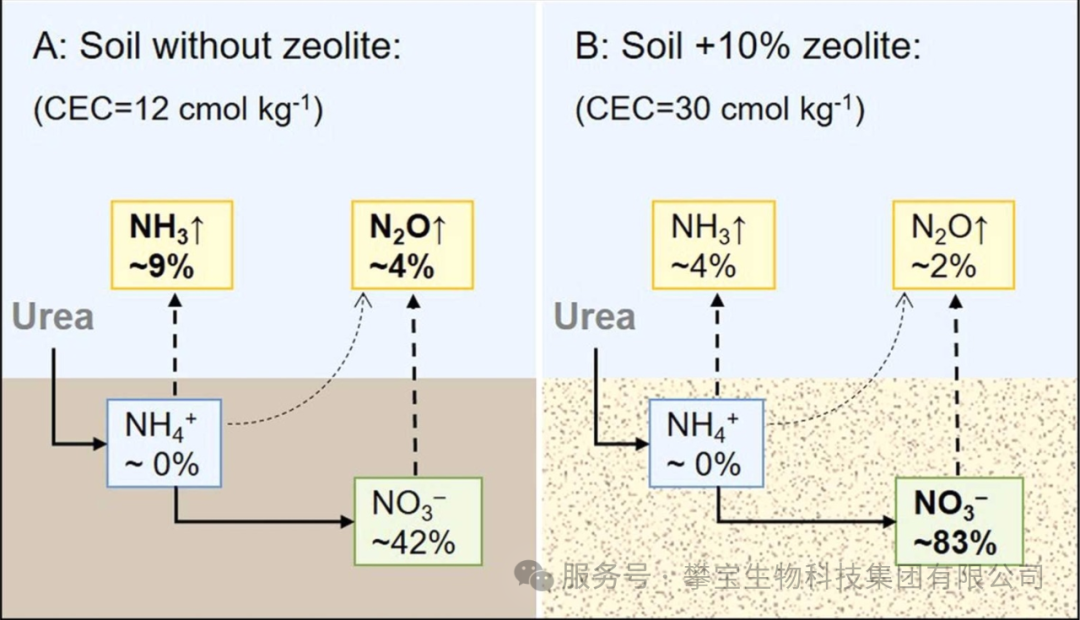
In recent years, researchers have identified soil cation exchange capacity (CEC) as a key physicochemical parameter influencing nitrogen fertilizer retention and transformation. Higher CEC values enhance soil's adsorption and controlled-release capacity for positively charged ions like NH₄⁺ and K⁺, effectively reducing nitrogen loss. Natural zeolites, with their unique porous structure and high CEC, are recognized
as promising mineral soil amendment materials. Their crystalline framework can adsorb NH₄⁺ and stabilize soil structure, theoretically reducing both NH₃ volatilization and N₂O emissions. However, the comprehensive impact of zeolites on carbon-nitrogen cycles in agricultural systems remains unverified through systematic research.
02. Study design and key findings
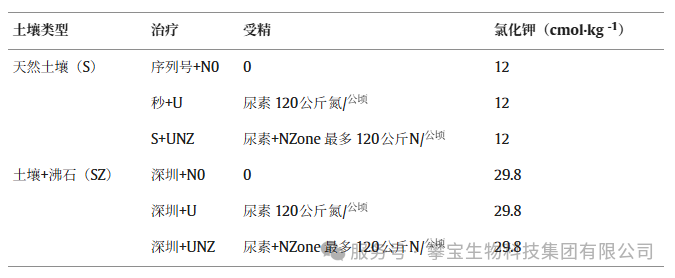
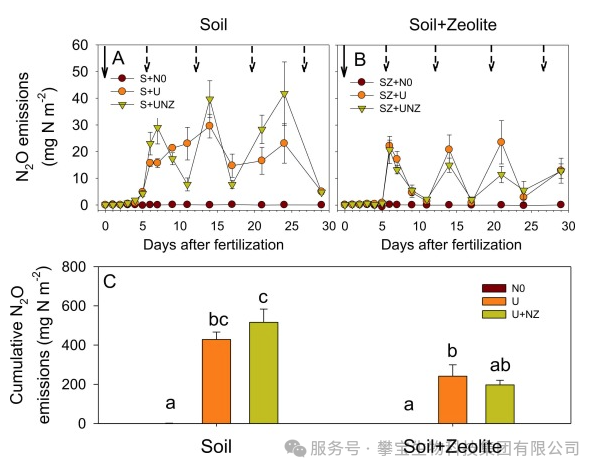
To address this issue, Wang Haitao's team conducted a one-month controlled cultivation experiment using typical farmland soil from the German region of Göttingen. They compared the effects of regular soil (CEC = 12 cmol·kg⁻¹) and soil amended with 10% natural clinoptilolite (CEC = 29.8 cmol·kg⁻¹) under urea fertilization conditions. The experiment also included NZone Max, a urea stabilizer, as a control.
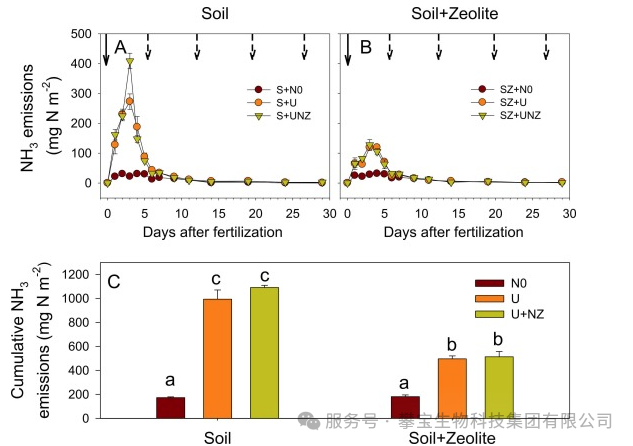
The results demonstrate: 1) Significant reduction in nitrogen emissions: Adding 10% zeolite reduces cumulative NH₃ and N₂O emissions by approximately 50% on average; 2) Enhanced nitrate retention: The improved soil's NO₃⁻ concentration nearly doubles, indicating greater nitrogen retention in the soil; 3) Stable microbial respiration: Reduced CO₂ emission fluctuations demonstrate zeolite's buffering effect on microbial activity; 4) Limited effectiveness of urea additives: NZone Max showed no significant emission reduction under high clayey soil conditions.
The national "antibiotic-free product certification" not only serves as an authoritative endorsement of Panbao's technical system, but also signifies high recognition of its achievements in standardizing and scientifically developing ecological aquaculture. Panbao's successful practices provide verifiable and replicable green models for the high-quality development of China's marine and freshwater aquaculture industries. Furthermore, it contributes the "Panbao Solution" to achieving China's agricultural "dual carbon" goals and advancing the modernization of aquaculture.
03. Mechanism Discussion
Research indicates that zeolites reduce nitrogen loss through three primary mechanisms: 1) High CEC (chlorine exchange capacity) adsorbs NH₄⁺, reducing volatilization; 2) Improves soil aeration and structure to prevent localized anaerobic conditions and inhibit incomplete denitrification; 3) Promotes complete denitrification by increasing the proportion of nosZ gene-carrying microorganisms, thereby converting N₂O into N₂ more thoroughly. These processes collectively stabilize the soil microenvironment, balancing microbial carbon metabolism and respiration. This coordinated action ultimately results in reduced nitrogen gas emissions and increased nitrate accumulation.
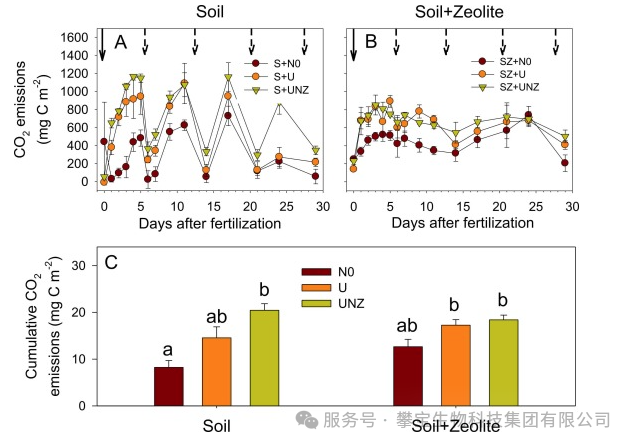
The study experimentally demonstrated that enhancing soil CEC can simultaneously achieve dual benefits of nitrogen fertilizer reduction and nutrient retention. Zeolite, a natural mineral amendment, offers advantages such as widespread availability, high chemical stability, and low environmental risk, making it suitable for promotion and application in agricultural ecosystems with low CEC or high fertilization intensity.
Future research could further: evaluate the long-term effects of zeolites with different application rates and particle sizes on the nitrogen cycle; conduct field-scale verification combined with crop yield and economic analysis; explore the synergistic effects of zeolites with organic fertilizers, biochar and other materials.
04. Conclusion
By enhancing soil cation exchange capacity, natural zeolites effectively reduce NH₃ and N₂O emissions from urea fertilization while improving nitrate retention and microbial stability. These findings provide new experimental evidence for mineral-based nitrogen management technologies, offering practical significance for agricultural green transformation and greenhouse gas emission reduction.