Many people today hold a common misconception: "Watermelons were very sweet when we were children, but they've become increasingly less sweet nowadays." This belief has even evolved into the notion that a watermelon's lack of sweetness is natural, while greater sweetness likely indicates the use of sweeteners and poses safety risks. Such views have been repeatedly reinforced on social media and in everyday consumer discourse, gradually fostering an "empirical misunderstanding." However, from the perspective of modern agricultural practices, this judgment is fundamentally flawed.
The sweetness of watermelon fundamentally depends on its variety, soil conditions, water and fertilizer composition, and photosynthetic efficiency. Under standardized cultivation practices, increased sweetness does not result from the use of so-called "sweetening agents," but rather stems primarily from enhanced root vitality, improved nutrient conversion efficiency, and better soil ecology. Conversely, under conditions of continuous cropping stress, soil compaction, or worsening salinization, watermelons are prone to issues such as reduced sweetness, bland taste, and inconsistent fruit quality. Thus, the core challenge in the industry is not that "sweetness equals safety risk," but rather how to restore crops 'natural flavor and quality without compromising ecological balance or safety standards. In this context, the watermelon demonstration project at Tongxing Village, Jiangcun Town, Huyi District, Xi' an City, Shaanxi Province, provides a set of authentic field comparison data.
【Case Demonstration: Comparison of Full Life Cycle Management for Watermelons in Tongxing Village】
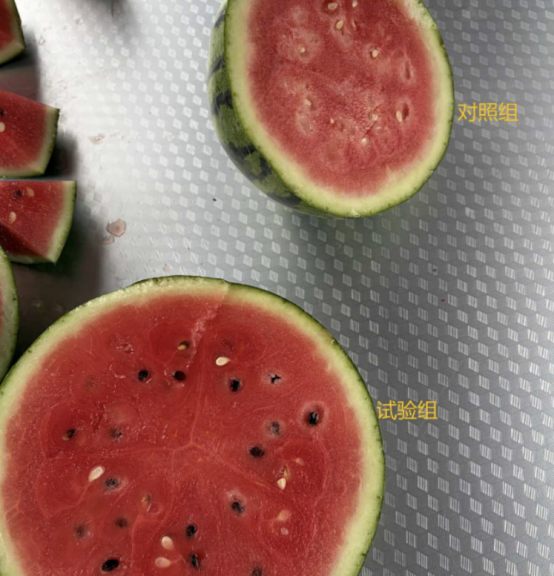
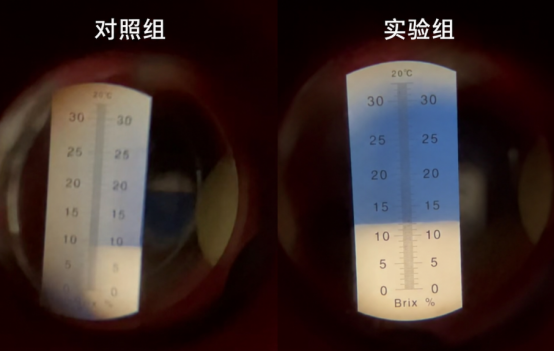
This demonstration project centers on "precision management throughout the entire growth cycle," integrating technological applications throughout the entire growth period of watermelons and implementing systematic interventions on consecutive cropping fields. The most evident change is observed in sweetness data: the experimental group grown with the same variety, Sweet King watermelon, achieved a sweetness level exceeding 12, compared to approximately 9 in the control group, demonstrating a significant difference.
I. Soil and Establishment Stage (Soil Fertilization Improvement)
The experimental group uniformly applied Panbao Mineral Organic Fertilizer as base fertilizer before planting, using 20 bags per mu, supplemented with 10 kg of compound nitrogen-phosphorus-potassium fertilizer to improve soil structure, increase organic matter content, mitigate compaction and salinization, and create optimal conditions for root growth.
II. Acclimation and Growth Stage (Root System Activation)
After successful acclimation following transplanting, the experimental group first performed root irrigation with clean water to stabilize plant conditions, followed by a systemic bioenzyme management phase: applying 5 kg of Panbao 343 Bioenzymes per mu. During the vine growth and expansion stage, the dosage was increased to 10 kg to enhance root vitality, promote nutrient conversion, and improve plant stress resistance.
III. Leaf Surface Regulation and Quality Improvement Stage
During the growth period, apply Panbao 343 bio-enzyme foliar spray every 10–20 days in combination with potassium dihydrogen phosphate to regulate plant nutritional balance, enhance photosynthetic efficiency, and promote sugar accumulation and fruit coloring.
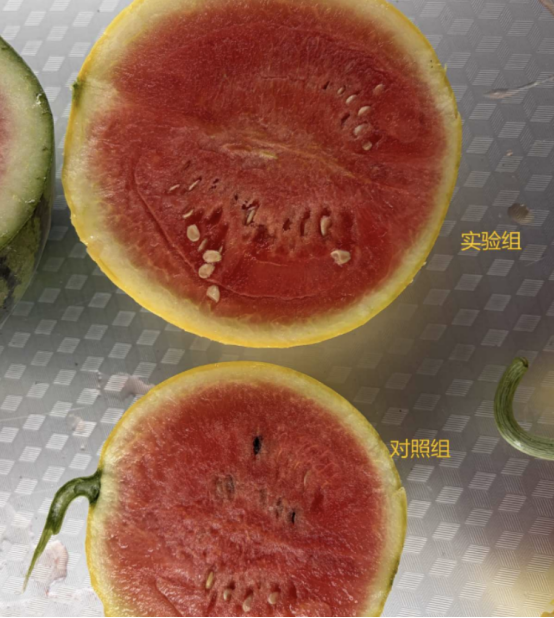
[Phased Comparison Results]
In this field comparison, the experimental group of watermelons demonstrated significant advantages:
Sweetness profile: The experimental group exhibited a sweetness level exceeding 12 degrees, whereas the control group reached approximately 9 degrees.
Fruit appearance: The flesh of melons in the experimental group was bright red and plump, whereas that in the control group exhibited a lighter color with slight whitening.
Fruit size: The average fruit size in the experimental group was approximately 1/3 larger than that in the control group.
Plant growth: The leaves in the experimental group were glossy green, thick, and exhibited vigorous growth with no significant cases of dead or missing seedlings.
Soil condition: The experimental group exhibited significant improvement in soil looseness, with reduced compaction and salinization.
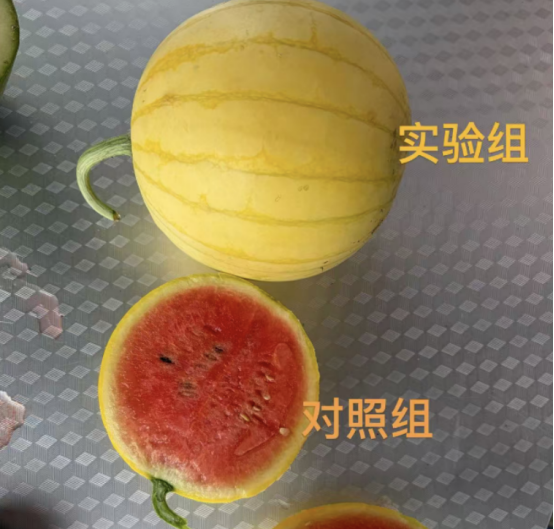
The expert panel noted on-site that, based on the comprehensive evaluation of the "root–stem–leaf–fruit" system, the experimental group had established a relatively stable nutrient cycling system, demonstrating that Panbao technology exhibits significant efficacy in overcoming replanting obstacles, enhancing root absorption capacity, and improving fruit quality.
[Technical Evaluation and Application Value]
The technical team emphasized that the key to this demonstration lies in "systematic rather than point-specific fertilization": improving soil structure through mineral and organic fertilizers, followed by sustained regulation of rhizosphere microecology via Panbao 343 bioenzymes, thereby achieving comprehensive intervention spanning from soil remediation to enhanced fruit quality.
Meanwhile, this production model demonstrates stable performance in terms of safety; its products meet green production standards for heavy metal and pesticide residue control, and are progressively aligning with the "Four-Zero Standards" production system, providing a reference framework for sustainable greenhouse watermelon cultivation.
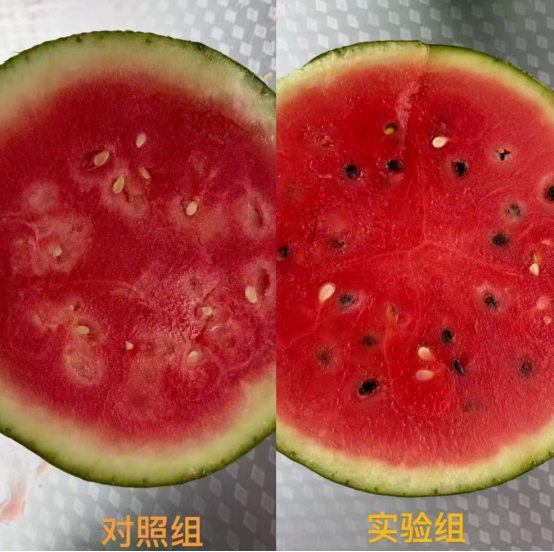
From traditional cultivation methods plagued by significant monoculture issues to a progressively improved ecological cycling system, the watermelon demonstration site in Tongxing Village is validating a new farming approach through real-field data: not merely achieving successful planting, but ensuring high-quality, stable, and sustainable cultivation.
The variation in sweetness across a watermelon demonstrates not merely issues with the fruit itself, but rather shifts in the underlying logic of the entire cultivation system. When we rely on "experience" to evaluate agriculture and "intuition" to assess food safety, we tend to attribute flavor deterioration to natural factors and misinterpret quality improvement as due to additives. However, the fundamental transformation in modern agriculture lies not in the crops themselves, but in the supporting systems: whether soil structure is healthy, root environment stable, and microecological balance maintained. Moving forward, Panbao Biotechnology Group will continue monitoring demonstration data, collaborate with expert teams to optimize management practices, and promote this model's replication across more protected fruit and vegetable production areas. By leveraging technology to empower the industry and using ecological approaches to enhance quality, we aim to provide sustained momentum for the high-quality development of regional specialty agriculture.